say cheese

swiss_cheese.jpgYou might think you need to go to the grocery store to find cheese, but I have found cheese in a variety of unexpected places: books, movies, music and more. (And yes, it can get messy. Let me tell you, camembert is not something you want to find in an unexpected place.) I’ve come across so much cheese that there’s far too much for just me. So, I offer up to you this delectable platter of assorted cheesy goodness. Get your crackers ready.

  1. “The Big Cheese”: an expression meaning “the top banana” or “the head honcho.” (Please note that the “head cheese” means something totally different.) Here’s something I did not now about the origins of the expression “big cheese“:

    This use of the word probably derived not from the word cheese, but from the Persian or Hindi word chiz, meaning a thing.

  2. Little Miss Muffet This nursery rhyme girl not only sits on her tuffet, but she eats her curds and whey. That’s cottage cheese, my friend.
  3. The Cheese Alarm,” a song by Robyn Hitchcock. This is a song of many cheeses:

    Roquefort and grueyere and slippery Brie
    All of these cheeses they happen to me

  4. the cheese stands alone“: a line from the song “The Farmer in the Dell”. The title of I am the Cheese, a young adult book by Robert Cormier, and also a movie based on the same, references this line of the song, and the loneliness of being cheese.
  5. Cheese has long been used as a bait in mousetraps, and is especially good for trying to catch cartoon mice. Recently, this cheesy bait concept has been extended to motivating office workers with the book Who Moved My Cheese. This irritating-looking parable appears to have spawned a slew of cheese parody books, at least three of which are entitled “Who Cut the Cheese?”
  6. The Stinky Cheese Man and Other Fairly Stupid Tales, by Jon Scieszka and illustrated by the illustrious Lane Smith. This picture book features, among other things less cheese-oriented, a cheesy reinterpration of the gingerbread man fairy tale. Catch it if you can.
  7. Cheeses of the World Series“: Jefferson Mint’s series of hand-painted collector’s plates featuring the cheeses of the world. Available only as an extra on the Austin Powers DVD. This is funniest deleted scene I can remember. It’s part of the overview that Number Two (Robert Wagner) gives of the activities of Virtucon, the “legitmate face” of Dr. Evil’s evil empire.
  8. Wallace and Gromit, Grand Day Out. Wallace loves cheese. Enough to go to the moon for it. And as we all know, the moon is made of cheese. (The other W&G features also feature some cheese, at least I know that The Wrong Trousers, and A Close Shave do. I have yet to see The Curse of the Were-Rabbit, but I would be sorely disappointed if it was cheese-free.)
  9. You know, there just aren’t enough movies featuring cheese. Paul Davidson, whose blog I found while doing my takehome final, offers a solution to this perennial problem by suggesting “ten movies whose plotlines would change by simply adding the word cheese to their titles.” An excellent proposition. (cf. “A Touch of Evil Cheese” and “Stand by Me Cheese”)
  10. The Cheese Shop sketch. In the land of the cheese, this sketch reigns supreme. John Cheese, I mean, Cleese and Michael Palin perform this legendary Monty Python gem. Hey, I was just making a joke about the John Cheese thing, but check out this slice of trivia from the John Cleese Wikipedia entry:

    John Cleese was born in Weston-super-Mare, Somerset, England to Reginald Francis Cleese and Muriel Cross. His family’s surname was previously “Cheese”, but his father, an insurance salesman, changed his surname to “Cleese” upon joining the army in 1915.

    Anyhow, the Cheese Shop Sketch features 43 kinds of cheeses. Well, the names of 43 kinds of cheeses. Whether you’re looking for Cheddar, Brie, Wensleydale or Venezuelan Beaver Cheese, you will find no better place not to buy it.

thought I’d share

Sometimes, I make myself laugh. This is what I just wrote:

Examples 17 through 22b were coded as “reconstructed dialog.” However, the dialog was obviously constructed rather than reconstructed as the interlocutors are styrofoam packing peanuts:

17. They’re all “Pauly, don’t you want to try just one of us?”

One of the questions on my takehome final is a brief study of the usage of the quotative be+all, a close relative of the quotative be+like. We’ve been given a small corpus of 50 examples of this quotative, including some from blogs. Such as this excerpt from this one:

People who eat pennies are stupid. I mean, it’s obvious what’s going to happen. Your body isn’t going to be able to digest a damn penny, okay? Same goes for shards of glass or thumbtacks or pieces of errant plastic or even little lego pieces. I’m past that. I’ve moved on. Matured. But when it comes to these damn packing peanuts they call out to me like they know what I’m thinking. They’re all “Pauly, don’t you want to try just one of us?”” and I’m all “No thanks Mr. Packing Peanut, I think you’ll just give me a stomach ache” and they’re all “Oh, c’mon — what’s the worst that could happen?” and I’m all “I could get sick” and they’re all “Sicker than when you got food poisoning from Pizza Hut?” and I’m all “How did you know about that?” and they’re all “We’re packing peanuts, Pauly — we know all.”

Let this be a warning to all of you. Anything you write and publish on the web could turn into data fodder for linguists, or even worse, linguistics students. Bwahahaha.

Oooh. There’s something I could research: the distribution of spellings of evil laughs on the web. There seems to be a bit of variation in the onset (bwahahaha vs muahahaha vs buahahaha vs mwahahaha) not to mention variability in the number of “ha”s. (We can get from two “ha”s, as in bwahaha, all the way up to…I’m not sure how many. I got as far as googling

“bwahahahahahahahahahahahahahaha”

and was amused to get 7180 hits, and this:

Did you mean: mwahahahahahahahahahahahahahaha

Hey, remember how I said I like sleep, and should be in pretty good shape to get some tonight? Not if I keep screwing around like this. So I’m all “I totally need to get back to work.”

carnival fool

I’m running off to join the carnival. More than one carnival, actually.

First stop: The 3rd Carnival of Colors thought my blue people would make an attractive side show.

Second stop: Ms. Mismanners has been dragged off to the 73rd Carnival of Satire to demonstrate clause contortionism, comma-juggling, epithet-throwing and her latest note-writing tips.

Third stop: I was going to put together a fun and exciting carnival list, but instead I’ll share with you some tidbits of Carnival Jargon that I snagged from the Wikipedia Carny page.

  • Mark

    A target for swindling, especially one whose gullibility has been demonstrated. Derived from the covert use of chalk to mark the backs of especially ripe targets. The term has entered the popular lexicon, usually as “easy mark.”

    So that’s why I kept getting chalk on my shirt. (Don’t worry, though. A nice young man said he’d go buy me a new shirt. I’m sure he’ll be back any minute now with my new shirt and the change from that large bill.)

  • Sharpie

    The opposite of a mark: an experienced player who is wise to traditional carny scams and is skilled at the games themselves.

    Is that what the marker folks had in mind?

  • Some money terms:

    Scratch – the revenue from a concession.

    Oats – stolen money from a concession.

    “The Nut” – The sum total (in cash) of a performance, or group of performances

    “The Kitty” – Budgeted amount of finance, regulated by the management of a carnival for purchasing food and supplies for its workers. (“We wanted a new tent, but there’s no more scratch in the kitty”)

    I had no idea kitty was a carny term…Though I’ve found possible other origins. (Wait, you mean Wikipedia might have inaccurate information? But it must be true. I read it on the internet.)

  • Then there’s “Sugar Shack”:

    a concession or food-stand that doubles as a front for drug commerce & trafficking.

    Wow. This makes me really suspicious of all those places that claim to sell things like maple syrup, candles and most suspiciously “quilt kits.” (Oh, fine, so the term has a legitimate maple-syrupy meaning, too. Or at least that’s what they want us to think. I bet their fingers are just sticky with illicit activities.)

  • Burn the lot

    To cheat players with little or no attempt to conceal the subterfuge, in the carny’s expectation that the same town will not be visited again.

    I try to take this attitude when visiting relatives. I mean, really, do I want to be invited back?

  • And ooooh. An infix:

    -iz- – inserted between the syllables of words to serve as a cipher or cryptolect.

    (This -iz- may or may not have a relationshizip to the –izz– infix.)

  • Here are some more assorted bits:

    Bally – A free performance intended to attract both tips and visitors to the nearby sideshow.

    Slough – Tear down your “joint”. Get it ready for the road.

    Spring – Open the carnival.

    “Rousty” or “Roustabout” – A temporary or full-time laborer who helps pitch concessions and assemble rides. In the 1930s, American Rousty’s would work for a meal and perhaps a tent to share with other workers.

    “Donniker” – Bathroom

    “Alibi” – A technique used where the player has apparently won the game, but is denied a prize when the jointee invents a further, unforeseeable, condition of the game. For example, a player may be disqualified on the grounds of having leaned over a previously undisclosed “foul line.”

  • Okay. There will be a quiz later. For your homework, please use one or more of these words in a sentence.

    breaking research from the geekology laboratories

    I mentioned yesterday that there are tests out there to help you determine how you fit into the geek/nerd/dork paradigm. There are many, many tests out there. I may explore these more, but here are a few (with my own results, when available).

    Geek, nerd or dork tests

    1. The “original geek test
    I like this one. And I actually like that you get bonus points for being a female geek. (Ha!)
    I scored 23.07692%, which puts me at the (unmodified) “Geek” level. (There are, of course, higher levels of geek. You also get to have, should you choose, a button with your test results. Behold mine!
    i am a geek

    2. The Geek Test: How geeky are you?
    This one is a shorter test, and may be derivative of the preceding test. (Or maybe they both are derivative of some previous source. Scientists at the North American Geekology Laboratories are furiously researching this question as we speak.)
    Here are my results:

    Geek Test Results
    You are 47.5% geeky.
    OK, not that geeky at all, are you? I’ll bet you even have a girlfriend (or boyfriend).
    The current average score is: 31.55%
    Fact: 35.45% of people who took this test admit to wearing a costume “just for fun”.

    3. A nerd test, called the “nerd purity test“:
    Here are a few sample questions:

    Do you have a Rubik’s Cube?
    Can you solve it?
    Without the book?
    Without looking?
    Do you have acne?
    Do you have greasy hair?
    Are you unaware of it?

    And here are my results:

    Your Nerd Purity Test Results
    You answered “yes” to 26 of 100 questions, making you 74.0% nerd pure; that is, you are 74.0% pure in the nerd domain (you have 26.0% nerd in you).
    Your Weirdness Factor (AKA Uniqueness Factor) is 11%, based on a comparison of your test results with 576688 other submissions for this test.
    The average purity for this test is 73.8%.
    The first submission for this test was received June 16, 1994.

    4. Another nerd test, this one called The Nerdity Test:

    THE NERDITY TEST
    Version 5.x.cubed.minus.3.x.all.divided.by.2
    10 December, 1993
    HTML-Version: 7 May, 1996
    CGI-Enabled: 13 March, 1998
    JavaScript-Enabled: 25 October, 2000

    This one looks pretty good, and gets extra points for the version number. However, I didn’t finish taking the test due to time constraints. (Also, when I clicked on the “credits” link for one of the questions, I accidentally cleared out my answers for the test at the point, and didn’t want to go back.)

    5. Blogthings had a pretty lame one. I’m not convinced by my results, even though the “nerd” percentage is somewhat similar to the previous test score. But come on. “no one would ever call you a nerd”? Oh, how wrong can they be:

    You Are 24% Nerdy

    You’re a little nerdy, but no one would ever call you a nerd.
    You sometimes get into nerdy things, but only after they’ve become a part of mainstream culture.

    6. To balance things out, we have a dork quiz:
    This one is not interactive, but the questions do look fun, like:

    9. Who do you most closely identify with?
    a) Kermit.
    b) Gonzo.
    c) Scooter.

    7. I’m actually most partial to the OKcupid Nerd? Geek? or Dork? test
    I like it that this considers nerd, geek and dork to be dimensions, and helps you to place yourself on those axes. This one has some pretty funny questions, like:

    When you encounter something you don’t know, do you often try to find out what it is? (Like an unknown word in a dictionary or event in an encyclopedia.)

    Wait a second-there are people who would answer “no” to this question? I’ve often wished I had access to imdb while watching movies in a theater…

    Do you enjoy quoting books/movies/tv shows, etc. in your conversations/letters/emails?

    (Possibly.)

    This test also claims to give a score about how you ranked on the three variable (nerdiness, geekosity and dork points) compared to others of your age and gender. Note that my score shows higher than 99% for all three. Which I thought was interesting. So I was curious about how I’d score if I were a male. Still got the same. So I actually tried retaking the test from a nearly totally different persona, a sort of suave but kinda dumb athletic type. And still, I get over 99% on the three variables. This suggests to me that a) this feature is probably broken, and these levels are probably not actually a reflection of the test-taker demographics b) I am really a nerd, geek and dork to follow up on this and c) I really should be getting back to the work I need to be doing and stop taking these damn tests.


    , you’re now logged in!


    Below you’ll find your test result. After, continue on to your
    homescreen to discover what we’re about.


    Modern, Cool Nerd

    78 % Nerd, 65% Geek, 47% Dork

    For The Record:

    A Nerd is someone who is passionate about learning/being smart/academia.

    A Geek is someone who is passionate about some particular area or subject, often an obscure or difficult one.

    A Dork is someone who has difficulty with common social expectations/interactions.

    You scored better than half in Nerd and Geek, earning you the title of: Modern, Cool Nerd.

    Nerds didn’t use to be cool, but in the 90’s that all changed. It used to be that, if you were a computer expert, you had to wear plaid or a pocket protector or suspenders or something that announced to the world that you couldn’t quite fit in. Not anymore. Now, the intelligent and geeky have eked out for themselves a modicum of respect at the very least, and “geek is chic.” The Modern, Cool Nerd is intelligent, knowledgable and always the person to call in a crisis (needing computer advice/an arcane bit of trivia knowledge). They are the one you want as your lifeline in Who Wants to Be a Millionaire (or the one up there, winning the million bucks)!

    Congratulations!

    Thanks Again! — THE NERD? GEEK? OR DORK? TEST


    My test tracked 3 variables How you compared to other people your age and gender:
    free online datingfree online dating
    You scored higher than 99% on nerdiness
    free online datingfree online dating
    You scored higher than 99% on geekosity
    free online datingfree online dating
    You scored higher than 99% on dork points

    Link: The Nerd? Geek? or Dork? Test written by donathos on OkCupid Free Online Dating, home of the The Dating Persona Test

    geek, nerd or dork?

    I wrote a bit a couple of weeks ago about clique taxonomies, especially as they pertain to the high school movie genre. In my research, I came across some interesting tidbits, which I thought I’d share.

    Most high school clique taxonomies make some reference to individuals who are not considered popular: the “outcasts” or “outsiders.” Most commonly, these “others” are labelled geeks, nerds or dorks. (Though the terms dweeb and spaz or spazz are not uncommon.) The use of these terms has usually been extended past the high school age, when clique membership becomes less clear. Interestingly, the taxonomies for these groups have become hotly debated.

    For example Militant Geek (“Militant Geek Custom Shirts: Propaganda for a Geek Friendly Future”) offers these words of concern:

    An alarming trend that we’ve noticed at the Militant Geek HQ is the sloppy usage of the terms ‘geek’, ‘nerd’, and ‘dork’. It was almost as if certain individuals assumed that they meant the same thing! For the record Geeks are those that have technical aptitude, nerds are bright but socially awkward, and dorks are just inept excuses for protoplasm.

    This site has even offered up a “handy comparison chart” to help people understand the differences in the classifications.

    Coyote of Not funny…ever offers these words of wisdom in a post called Geek Dweeb or Spaz?

    Dork – (Pronounced “Door’k” From the Latin “Murdockious”) A Dork, like the Spaz has all the knowledge and ability of a Geek or a Nerd, but has NO clue

    Buckethead of The Ministry of Minor Perfidy offers definitions and discussions in the similarly-titled though differently-punctuated post Geek, Dweeb, or Spaz?

    Nerd: the nerd is base type, from which all the others are derived. Nerds are bright, and lacking in social skills. They have odd interests. They are dilettantes, and usually end up consumed by counterproductive pursuits like the SCA, Star Wars collectables, and Star Trek conventions. Some nerds can achieve purpose in life translating the arcane thoughts of the geeks to the mundane normal people. Nerds are hapless, though they often have a goofy charm.

    90028549v8_240×240_front_color-black.jpg

    And this is just the tip of the iceberg! Whether it’s the Wikipedia entry for geek an “ask yahoo” response to the fundamental question “What’s the difference between a nerd, a geek, and a dork?” or a discussion board topic on a site called Geek Culture. You can even get t-shirts that help you with the terms, like the cafépress “geek hierarchy” shirt:

    Geek Hierarchy: Geek > Nerd > Dork. Geeks design it, Nerds buy it, Dorks break it.

    Do you wonder where you fit into the picture? Do you have leanings of geekery, or hints of nerdiness? Or are you just a total dork? There are tests to help! (Well, to help you figure out if you are a nerd or a dork. Finding help with being a dork is another question.)

    Okay, I’ll have to post about the tests later. I’d better get to work.

    collecting tokens

    The word token has many meanings, having synonyms such as symbol, memento, or representative:

      1. I give you this squid as a token of my affection.
      2. I’ll keep these pants forever as a token of my holiday escapades.
      3. I posted this photo of a duck in the dishwasher as a token of the many pictures I’ve taken of random things.

    A token can also be a conventionalized object, such as a metal coin or plastic figure, used in place of money for some transactions or used in some sort of group activity, like a game.

      4. I’m not sure what to do with my old subway tokens now that they’ve started using Charlie Cards.
      5. My old Monopoly game was missing half its tokens.

    In my world, though, the most frequent use of the word token is the meaning used in linguistics. (Interestingly, the about.com page, with all its various links and definitions from those various sources, doesn’t even mention linguistics.) In linguistics, a token is an instance of some form that is being studied, an item of a particular category or class. It is commonly discussed in terms of the type-token distinction, which has its roots in philosophical usage:

    Type (metaphysics)

    A type is a category of being. A human is a type of thing; a cloud is a type of thing (entity); and so on. A particular instance of a type is called a token of that thing; so Socrates was a token of a human being, but is not any longer since he is dead. Likewise, the capital A in this sentence is a token of the first letter of the Latin alphabet.

    According to the Stanford Encyclopedia of Philosophy,

    The distinction between a type and its tokens is an ontological one between a general sort of thing and its particular concrete instances (to put it in an intuitive and preliminary way).

    In linguistics (and in related speech and language research) the term token is used to refer to any single instance of some phenomenon or category that’s under investigation, and type is used for some category of which a token is a member. The type-token distinction is often used when investigating words used in a written text. Imagine, if you will, a short text such as:

    I like the word pants. I actually like saying the word pants. It’s one of those words that begs to be repeated. Pants. For example, in a discourse on pants, I would hypothesize that speakers would be less inclined to use pronouns to refer to pants than, say, other entities in the discourse. Even if the word pants had just been mentioned, I would still say “pants.”

    The text in the block quote above has 63 words. However, it doesn’t have 63 unique words. It has fewer unique words, or word types. I counted 41 unique words, so 41 types. (Mind you, I’m counting things like “say” and “saying” as different words for these purposes, and ignoring punctuation and capitalization.) If we want to look at a particular word type, oh, let’s say maybe the word pants, we can count 7 instances of that word in the text. That’s 7 tokens of pants.

    While token is commonly used for a written instance of a word in a text, it can also be used for a larger or smaller unit of speech or language. It could be a spoken production of a sentence, or a production of a single sound segment, like a consonant or a vowel. It could be a gesture. It all depends on what categories, or types, that you are looking at.

    For example, let’s say I’m studying phonetic characteristics of a vowel in American English, such as [æ], the vowel in words like bad, pat and pants. I would probably want to collect a large number of instances of words spoken aloud that contain that vowel. If I get a recording of someone reading a list of 5 words with [æ], and I have them read that list 3 times, I end up with 15 tokens of [æ] by that speaker. I could also talk about having 15 tokens of words containing [æ], or even 15 tokens of utterances containing [æ]. If I have 4 speakers all reading that same list, 3 times each, I end up with 60 tokens of [æ].

    Here’s an example of the use of the word tokens from a phonetics paper* I grabbed off the web (found by googling “tokens of p”, in case you’re wondering):

    This includes all /k/ and /p/ tokens produced, not only those in potentially fricatable environments.

    (And yes, I do get off on this stuff.)

    The article repeatedly mentions tokens of /p/ and tokens of /k/, and how many tokens of each fit some criteria, or follow some pattern.

    Now let’s say we wanted to study the use of the word tokens in that text. (So in this case, our type is tokens.) Using a basic text search, I counted 28 instances of the word tokens. That means that the text contains 28 tokens of tokens.

    Much of what I do as part of my research, especially for my various jobs, involves collecting, categorizing and otherwise analyzing tokens. I love this part, collecting and working with the data. It’s the thrill of the hunt. Followed by the thrill of the puzzle. Followed by the thrill of the data organization. (What I must learn to love is the thrill of the write…)

    ———————————-

    *Loakes, D. and McDougall, K. (2004) “Frication of /k/ and /p/ in Australian English: Inter – and Intra-Speaker Variation” in Proceedings of the 10th Australian International Conference on Speech Science & Technology, pp 171-176.

    Nimberpoop, R. (1954) “What’s your deal with the word pants? A study in bizarre philological obsessions.” Sense, Nonsense and Polysemy Quarterly, 3, pp. 4-97.

    high school movies and clique taxonomies

    It’s no wonder I’ve been having traumatic high school flashbacks. In my class on Monday, there was an extended discussion of terms used to categorize cliques (and outcasts) at the various schools that people had attended. (Keep in mind, for most of the students in the class I’m taking, high school was fairly recent history.) This was all relating to our assigned reading, primarily a text by Penelope Eckert about an ethnographic study she’d done in an American high school. The Eckert text (the same one that had a sentence that made me laugh out loud) discusses the terms Jocks and Burnouts, terms used by the teenagers in the Detroit area suburban high school she studied.

    So the kids (yes, I’m freakin’ old) in the class were all relating the terms used in their schools. “We had jocks and greasers” or “we had preppies and townies”. Terms like “skaters” and “band kids” were bandied about. To be honest, I don’t remember all of what they said. I was too busy feeling old and having flashbacks to various movies that make reference to clique structure and terminology. Which is basically every American high school movie ever made.

    But lets go over some examples, with the terminology:

    1. The Breakfast Club (1985)
      This movie featured 5 students of differing categories: Jock, Princess, Criminal, Basket Case and Brain.
    2. Ferris Bueller’s Day Off (1986)
      This quote about sums it up:

      Grace: Oh, he’s very popular Ed. The sportos, the motorheads, geeks, sluts, bloods, waistoids, dweebies, dickheads – they all adore him. They think he’s a righteous dude.

    3. Heathers (1989)
      This movie has the exclusivity (and cruelty) of the popular clique taken to the extreme, with the 4 members (3 of whom are named Heather) called “The Heathers”.
    4. Clueless (1995)
      I don’t remember what terms this movie used explicitly, but I found this reference to the clique structure:

      On paper, Clueless would sound like just about any other high school comedy. It’s got the popular girls and the jocks, the dreamboats and the bitches, the stoners and the slackers.

    5. 10 Things I Hate About You (1999)
      One character gives a tour to another, a new kid at the high school, and explains the who’s-who of cliques:

      Over there you’ve got your basic beautiful people. Now listen. Unless they talk to you first, don’t bother.

      This movie went for somewhat exaggerated cliques, with Audio-video Geeks, Coffee People, White Rastas, Urban Cowboys and Future MBAs.

    That’s all I got for now. I’ll have to do more research into this issue at some point. (Translation: I’ll watch some high school movies.) I am on the lookout for new references on this subject matter. If anyone has any clique terminology to add, whether based on your own ethnographic studies, knowledge of the literature, or familiarity with bitchin’ high school movies, please let me know.

    5 things

    The guy over at //engtech is having another group writing contest. Last month, he had his first contest, and I participated with my “getting over V.D.” post. And while I didn’t win the prize, which was awarded by a random drawing, I did get selected on the favorites list, which is actually cooler.

    This time around, the contest involves writing a list of 5 things. Seeing as I love to write lists, I’m all over this one. You can even enter more than once, so I’ll probably write more than one post. So here’s my first list of 5 things.

    5 things

    1. thingamajig: a placeholder name
    2. whosiwhatsit: a filler word
    3. whoodger-doodger: a dummy noun phrase
    4. doohickymajig: you know, a thingummy or whatsit you say when you can’t remember the diddlethingy of the gizmo, doodad, dingle-dongle or dealybob
    5. whatchamacallit: a candy bar

    watching my language

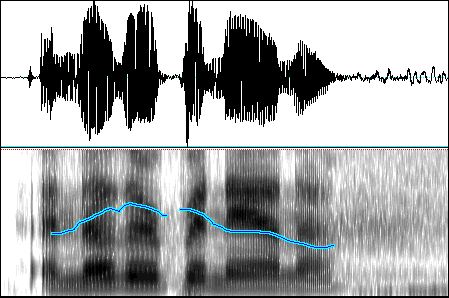
    another_banana.jpgIt’s a strange expression for me to use, “watching my language.” Especially since I am a linguist, and study language professionally. And actually spend time looking at visual representations of speech. But that’s not what I’m talking about.

    (Warning: this post contains “language.” And by that, I mean l*ng*ag*. You know, %$*#! words. So if you are my mother-in-law, or someone else offended by such words, please read no further. Actually, if you are my mother-in-law, it’s not really me at all who’s writing this. I have no idea how this post got here. In fact, this whole blog must have been written by someone else who coincidentally has my name.)

    I was reading a message board message a little while back, and came across a message where someone had written “cr*p”. Yes, c-r-*-p. And all I could think in response was “holy fucking shit, crap is a bad word??”

    Crap is a word I use fairly often. As in Oh, crap, I forgot something. Or I have a lot of crap to deal with. I mean, I realize that it more-or-less means shit. But I thought it was way less of a swear-word. Stronger than doodoo, certainly, but really quite mild. I may even have said crap in front of my mother-in-law. And my mother-in-law feels quite strongly about swearing. As in it upsets her. She didn’t like the movie “Titanic” because someone uttered the word shit in it. (There are plenty of reasons not to like that movie, but quite honestly, shit wasn’t even on the radar for me.) And I really don’t want her to find out about this blog of mine, as I’m sure it would upset her. Mostly because of my language. I mean, hell, I write the word ass often enough.

    And while, as my sister put it, I am unlikely to be considered the Kevin Smith of the blogosphere, I do want to reserve the right to swear on my blog. Sometimes I just feel the need. I’m not trying to offend (I spend my whole life trying not to offend), but I find it liberating to have this uncensored aspect of writing.

    But then there’s this whole parenting business. I caught myself saying to Phoebe, “you are so damn cute!” (She is really damn cute, you know.) And I ask myself, is this appropriate child-directed speech?

    Anyhow, at some point, like so many before us, we’re going to have to face this issue. It’s obvious that Phoebe now understands many words, and can even produce a few. And it’s only a matter of time before Phoebe starts demanding her damn lunch when she’s at daycare, exclaiming “crap, my blocks fell over,” or telling another small child to hand over the fucking dolly.

    It’s not that we swear a whole lot. I mean, it’s not like every other word that comes out of our mouths would need to be bleeped on prime-time TV. But, well, swearing happens. Shit happens. And other terms. In our speech, and in the movies we watch, and the music we listen to. For example, I may want to reconsider singing along to “Don’t fuck me up (with peace and love)” by Cracker lest Phoebe picks up on the words…

    One option we have considered is to go the Battlestar Galactica route. They have cleverly and subtly substituted frak for another term. As in Frak off, frak me, frak you, go frak yourself. No frakking way.

    So, please excuse me. It’s time for me to prepare Phoebe’s frakking breakfast.