grammaticality judgments

I started grad school in the fall of 2000, after a few years away from academia. (I spent those years mostly working in bookstores, in case you wondered.) One of the two classes I took that first semester was Syntax I, a rollicking good time of drawing syntactic trees and judging the grammaticality of sentences like:

  1. Fred put peanut butter on the sandwich. (Sure. Sounds grammatical.)
  2. Bob ate the sandwich. (Totally grammatical. Where’s my sandwich?)
  3. I asked what Fred put peanut butter on. (Yeah, it’s grammatical.)
  4. *Bob ate the sandwich that I asked what Fred put peanut butter on. (Huh?)

The class was a rite of passage, as all new grad students to the program (more or less) had to take it. There were also a lot of undergrad linguistics majors in the class. The course was a fair amount of work, with fairly long drawn-out homework assignments. I didn’t find it too hard, just time-consuming to do the readings and homeworks. But most of the students found it quite challenging, it seemed, and many had a lot of trouble with the homeworks.

One day, when our homework was passed back to us, I happened to see that the woman sitting next to me got a score of 100. The same as me. And I found myself feeling surprised. And I was actually quite startled by my surprise. Because I recognized that it was not just about the challenge to my ego resulting from someone else getting high scores. I realized that I was surprised that she, this particular woman, was also getting high scores.

Why was I surprised, I wondered. She was a grad student in my program, like I was. Clearly she had a college degree, was educated. And from the brief interactions we’d had up to that point, I had a generally good impression of her. She was friendly, outgoing, enthusiastic. But I realized, as I reflected on the incident after class as I headed home, that I had been surprised to realize that she was also smart. And I came to the realization that the reason I hadn’t expected her to be smart was that she had a distinct regional accent.

It was disturbing to me to realize that I’d had this prejudice. Me. A student of language and linguistics. I know that the mainstream American dialect, the accent of TV newscasters and movie stars, is just one of many varieties of the English language. No better, no worse. All language varieties are systematic, grammatical. And the variety of a language that a person speaks is no reflection of that person’s intelligence or abilities, but merely a reflection of that person’s history.

But our society (and I’m sure it’s not just ours) places value on certain language varieties above others. People feel, whether it’s conscious or not, that certain accents sound more intelligent than others. To the average American, for example, a person speaking with a “refined” British accent will sound intelligent, even if that person is dumb as a stump. Likewise, many Americans will consider regional U.S. dialects to make a person sound uneducated. Many speakers of regional dialects consciously “lose their accent,” or shift to the mainstream accent, in order to avoid perceived stigma.

I’ve thought about this brief incident from my own past a bit lately, following various topics in my sociolinguistics class. Specifically, I’ve thought a lot about how perceptions about language affect speakers of non-Mainstream dialects, particularly AAVE (African American Vernacular English). Like the mainstream dialect, AAVE is complex and rule-governed system, albeit with some different grammatical rules than the mainstream dialect. Many people, however, including educators, actually know very little about these non-mainstream dialects. Instead, they often assume that speakers are speaking ungrammatical English, or that the speakers are even somehow deficient cognitively. The impact of this can be particularly harsh on young children starting school.

It’s hard for me to admit that I’ve also been susceptible to subtle linguistic prejudice. But this awareness has opened my eyes to the real risks of discrimination to children and other speakers of non-mainstream varieties of English. And I’m heartened by the fact that many Universities now require teachers-to-be to take a course in linguistics, which hopefully will give them some background knowledge of AAVE and other linguistic variation.

many thanks for all the pants

As I have quickly risen to the highest echelons of the pants-writing set, it is my responsibility to divulge breakthroughs in my ongoing pants research whenever possible. So I would be remiss if I did not share with you (with her permission) the following excerpt from an email sent by my lovely friend Elizabeth, without whom I could not have reached these great pants heights. (You see, it is Elizabeth who first introduced me to the inherent funniness of the word pants.)

Oh, and this morning I was innocently washing my hair when I noticed that my shampoo bottle had a trivia question on it: Who do people say they talk to the most? And then it said the answer was on the conditioner bottle. I grabbed the conditioner bottle and the answer was….PANTS. I kid you not. As it turns out, I bought the green shampoo and the purple conditioner and even though they’re the same brand, they’re not the same type, so they have different questions and answers. So I’ve spent most of this morning trying to figure out what the answer to the question is (I would guess spouse/partner, Evan thinks it’s themselves) and what the question could possibly be that’s answered by the word pants. It’s all I can do not to drive to CVS and check out the green conditioner and purple shampoo. I think it’s cruel that hair product manufacturers would do this. I mean, don’t most people take showers in the morning, when they’re not at their sharpest mentally?

Anyway, thought you’d appreciate the random appearance of pants in my life.

–Elizabeth

In the interests of pants research, I aks for your help. Please consider some possible questions which might be answered with “pants”, and share them with the greater pants community.

May the pants be with you.

High school movies that are more fun than high school

I’m back from my midterm. Relatively unscathed. But I hate tests. Did I mention that? It’s not that I don’t do well on them, it’s just that they stress me out. And I’d recently thought I was done with them. I mean, I’m so over that sort of thing. Shouldn’t I be over that? Hello? Mid 30s. Have an advanced degree. Not to mention house, husband and now offspring. But studying for a test makes me feel like I’m back in high school. [Shudder.]

Thinking about high school made me think about high school movies. Some of which are way more fun to watch than going to high school. So, here’s a list. Think of it as a syllabus. And yes, there will be a test.

High school movies that are more fun than high school

  • Buffy the Vampire Slayer (1992)
    The movie’s not quite as much fun as the show, but still fun nonetheless. Valley girls and vampires. Plus Paul Reubens (a.k.a. Pee Wee Herman) has this hilarious extended death scene that is such a treat.
  • Heathers (1989)
    Cliques. Cruelty. Croquet. A wonderfully dark comedy that reminds me that I’m oh-so-glad to be done with high school. Eskimo.
  • Clueless (1995)
    Based on Jane Austen’s Emma. This one’s actually quite sweet. And also has a cool soundtrack.
  • 10 Things I Hate About You (1999)
    Based on Shakespeare’s “Taming of the Shrew,” and features at least one fairly kick-ass teenage girl character.
  • Bill and Ted’s Excellent Adventure (1989)
    Dude. A totally righteous high school movie. With bodacious time travel.
  • Back to the Future (1985)
    The classic Michael J. Fox work. More time travelling, more high school.
  • Better Off Dead (1985)
    I love John Cusack. Especially his earlier works. And it has raisins in it. You like raisins.
  • Ferris Bueller’s Day Off (1986)
    This movie appealed to me more when I was actually a teenager than it does now, but it’s still fun. It bears no resemblance to my own high school experience.
  • The Breakfast Club (1985)
    Having gone to high school in the 80s, I must include a token of the brat pack oeuvre.
  • midterm mayhem

    I have a midterm tomorrow. Which just feels so incredibly wrong.

    But aside from that, it means I absolutely should be spending my day (or whatever available moments I have during the day) studying, reviewing my notes, and pondering the meanings of various tidbits of sociolinguistics terminology. And it means I absolutely should not be sitting here at my laptop goofing off. Because that would be wrong.

    Here are some things I absolutely should not be writing today:

  • a school-related list of movies
  • my personal adventures yesterday, and our first post-Phoebe “party”
  • a description of the state of our home post-party (is there such a thing as post-party depression?)
  • a discussion of the unexpected spike in my blog hits during a couple of hours yesterday
  • a treatise on the comparative merits of ducks in various types of dishwashers
  • an in-depth corpus-based analyis of squid discourse
  • an advice column about the etiquette of exchanging bananas
  • anything to do with pants
  • a list of things that I should not be writing about
  • Here’s some of what I should be writing about:

  • the nitty gritty of calling a language variety a dialect or language (you say it’s a language, I say it’s a dialect, let’s call the whole thing off)
  • the distinctions among a pidgin, a creole, a koiné, and contact jargons (and not the distinctions among pigeons, crayolas, coins and contact lenses)
  • Acrolects, Mesolects and Basolects (oh, my!)
  • the monogenesis theory, the polygenesis theory and the bioprogram hypothesis (which sound straight out of scifi, but really aren’t)
  • dialect continua, diglossia, decreolization and relexification (which sound almost sexy, but probably aren’t)
  • killer languages
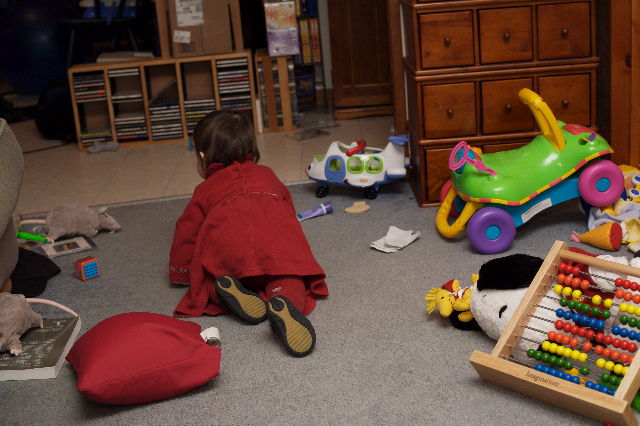
  • history of the Little People airplane revealed

    When I was doing some preliminary research for my recent post on the Fisher-Price Little People airplane toy, I came across some obscure but interesting information about the Soviet origins of the plane design. I had to share. The article is supported by some incredible photos and diagrams, including this one of the first flight of the prototype.
    creepy new airport security technology can look under your pants

    I saw a NYT article this morning describing new airport security technology: passenger x-ray machines.

    X-ray vision has come to the airport checkpoint here, courtesy of federal aviation security officials who have installed a new device that peeks underneath passengers’ clothing to search for guns, bombs or liquid explosives.

    This creepy new technology can let TSA employees do a virtual strip-search. It actually looks very impressive, giving an outline of the passenger’s skin. And I guess I find it fascinating. But, and I repeat. I also find it creepy. And unsettling.

    Anyhow, this news story reminds me of a number of things. So here. Have a list:

    1. Superman (eg. 1978). He had x-ray vision. Could look through Lois Lane’s clothes to see her undies.
    2. Total Recall (1990). Shows security screening of the future with people walking along through full-body x-rays. We get to see skeletal structure in this movie, though. Not skin.
    3. The image the article shows looks a little like a 3D ultrasound. (Though the technology is totally different.)
    4. And I’m reminded of the airport security game (Hat-tip to Schneier, who has lots of interesting things to say about the games we play relating to “security.”) This game lets you play an airport security employee, screening passengers and their bags as they try to pass through security. Your task is to keep up with the ever-changing, and frequently random, restrictions on items that passengers may have on their person or in their carry-on bags as they pass through. For example, sometimes passengers are not allowed to wear their shoes as go through the security gate. And sometimes they are not allowed to be wearing pants.

    um…uh…what do you mean?

    I’m experiencing some internal conflicts. Namely, there is often a gap between how I want to be spending my time, and how I should be spending my time. One thing I want to be doing is writing for fun. One thing I should be doing is writing for work and school. So sometimes I try to reconcile these by writing for fun and work. So in the interest of reconciliation, I bring you…the filled pause.

    As part of my work and study, I do a lot of transcriptions (of various types: orthographic, phonetic and prosodic) of actual speech. (And by speech, I mean people speaking. Not speeches.) One of the common features of spoken language (in contrast to written language), is the occurence of what are commonly called filled pauses. In English, the two most common/frequent of these are uh and um (or er and um in British English). These are generally considered to be non-linguistic speech elements, i.e. sounds that we make in the course of speaking that are not really part of the language. However, I just read a really cool article that makes the argument that um and uh should actually be considered words, in particular interjections:

    We will argue that uh and um are, indeed, English words. By words, we mean linguistic units that have conventional phonological shapes and meanings and are governed by the rules of syntax and prosody. We will also argue that uh and um must be planned for, formulated, and produced as parts of utterances just as any other word is.

    They suggest that the meanings of uh and um lie in their usage, as with other interjections. Whereas nouns, verbs and adjectives will be defined by way of a paraphrase or with synonyms, interjections typically have a description of how or when it is used. Take a word like ouch. Its most common usage is an interjection, and dictionary.com gives its definition like this:

    ouch 1 /aʊtʃ/
    (used as an exclamation expressing sudden pain or dismay.)

    Notice how the definition is in parentheses. Compare this to your typical noun or verb, like, say, ouch (Okay, this is a totally new word for me, too, and nearly as surprising to me as the alternate definition of mother….):

    ouch 2 /aʊtʃ/
    noun
    1. a clasp, buckle, or brooch, esp. one worn for ornament.
    2. the setting of a precious stone.
    –verb (used with object)
    3. to adorn with or as if with ouches.

    So the authors of this article (Clark and Fox Tree, 2002), suggest that uh and um are words with meanings that can be defined in terms of their usage: to signal that the speaker is expecting a delay in speaking. Further, they go on to elaborate that uh is used when the speaker expects a shorter delay before resuming their speech than for those cases when um is used. They found evidence to support this in several spontaneous speech corpora. They also discuss various implicatures (in the Gricean sense) associated with using uh and um, including many which have been explored in the literature. For example, a speaker may use a filled pause (or filler) to implicate difficulties in speaking (um…it’s the…doohickey…uh…um), or a desire to hold the floor lest someone else tries to get in a word edgewise (um…hello, still speaking here).

    Anyhow, I found their arguments to be quite compelling. And considering um as a word squares quite nicely with my own recent awareness of written uses of um. I’ve found myself using um occasionally in emails, or in blogging, or blog comments. I use it to signal discomfort, or perhaps even embarrassment. For example, considering the following totally hypothetical comment exchange in response to an entry I’ve written about a childhood memory or finding a duck in the dishwasher:

    comment from “Bob12497”:
    Great post, and great layout! I agree with everything you say. I explore similar topics on my website.

    comment from me:
    Hi, Bob12497-
    Um…thanks.

    Or consider the following hypothetical email:

    Hi, Bob-
    It was great seeing you at the meeting this morning. As you could probably tell, I was very enthusiastic about our upcoming goals and my commitment to participation in these new projects. Um…could you remind me what the new projects are about?

    Anyhow…um…I should probably get to some cleaning. The squirrels have started complaining about the clutter.

    References:
    Clark, H. H., & Fox Tree, J. E. (2002). Using uh and um in spontaneous speaking. Cognition, volume 84, 73-111.

    Snodgrass, G. & McSnorfle, Q.R.S. (2007). “Managing your duck in the dishwasher.” Unusual Duck Sightings Weekly, volume 23, pp. 23-99.

    different

    Phoebe turns one tomorrow. Leading me to reflect a lot on the past year. I’ve been asked if having Phoebe has changed my life a lot. The answer, after I stop laughing hysterically, is more than I could have imagined. But while I’d expected my life to be different, I hadn’t realized how much I would be different.

    I always knew I wanted kids at some point. (Not many kids. One or two.) But I always thought of myself interacting with older kids. The kind that can walk and talk and feed themselves. Read books. Go to school. Have conversations about reading books and going to school.

    I was pretty indifferent to babies and small children. Actually, I had a slight aversion. I’d jokingly, or not entirely jokingly, call them small things. Smelly things. Noisy things. And all these things are true. Babies are small and at times smelly and at times noisy. This has not changed. What’s changed now is how I react to these issues.

    I used to work in a bookstore, and spent some time as children’s department manager. Not for love of children, exactly, but for love of children’s books. The kids themselves were part of the scenery. Almost a necessary…well if not a necessary evil exactly…a necessary hazard. I liked (some of) the older kids well enough, and enjoyed doing craft and reading activities with them. But babies? Toddlers? Well, quite honestly I learned to tune them out. I could actually pretty much ignore the the squeals, cries and other miscellaneous noise emissions from the smallest of bookstore customers. I once had an experience where I became aware of this power to turn out the sound of babies crying. I was on a long flight, and shortly after landing, some parents travelling with a small baby in the row behind me more or less apologized for all the crying during the flight. Amazingly, I hadn’t even particularly noticed.

    But lately, I’ve developed heightened baby awareness. And I’m not annoyed by them at all. In fact, when I was on the train recently, a young baby around Phoebe’s age was making fairly loud babbling and howling noises. Not crying, but making loud happy noises. And I…enjoyed it. I felt warm and fuzzy. Me, who once would have tuned it out with some annoyance, or even changed seats to get more quiet.

    And this isn’t the only way I’ve changed. I’ve developed a new vulnerability. I’ve been devastated for weeks about news stories involving the deaths of young babies, and lost sleep over stories where a parent of a young child died. It’s even been when such stories were from several years ago. Don’t get me wrong. I was never exactly insensitive to such events, such stories. But they never used to make me feel destroyed. And my new sensitivity extends to fiction, too. I got choked up watching “The Incredibles”, for god’s sake, when I saw it a few weeks ago. An animated action movie. And I’d seen the movie before with no such effect. But in many ways I was a different person then.

    So, here I am. One year later. Almost one year ago today, the population of our household changed. We added one small new person. And small as she is, the difference she’s made is immeasurable.

    brand new Phoebe almost 1year.jpg
    Phoebe Lenore, 1 hour old (left) and almost 1 year later (right).