5 things

The guy over at //engtech is having another group writing contest. Last month, he had his first contest, and I participated with my “getting over V.D.” post. And while I didn’t win the prize, which was awarded by a random drawing, I did get selected on the favorites list, which is actually cooler.

This time around, the contest involves writing a list of 5 things. Seeing as I love to write lists, I’m all over this one. You can even enter more than once, so I’ll probably write more than one post. So here’s my first list of 5 things.

5 things

  1. thingamajig: a placeholder name
  2. whosiwhatsit: a filler word
  3. whoodger-doodger: a dummy noun phrase
  4. doohickymajig: you know, a thingummy or whatsit you say when you can’t remember the diddlethingy of the gizmo, doodad, dingle-dongle or dealybob
  5. whatchamacallit: a candy bar

more on language judgments

I came across this line tonight, in doing my reading for class:

The belief in the existence of some ‘inherently good’ variety of their language is one of the most deeply held tenets of public ideology in most Western countries. Yet a cursory inspection of the facts will reveal that these standard varieties are nothing more than the social dialect of the dominant classes.

From Guy, Gregory. 1989. “Language and social class.” Chapter 3. In Newmeyer, F. (Ed.), Linguistics: The Cambridge Survey IV. Language: The Socio-Cultural Context. Cambridge University Press. Pp. 37-63.

(This is something I was getting at with my post on language judgments from earlier this week. But this made the point so beautifully, I had to share.)

watching my language

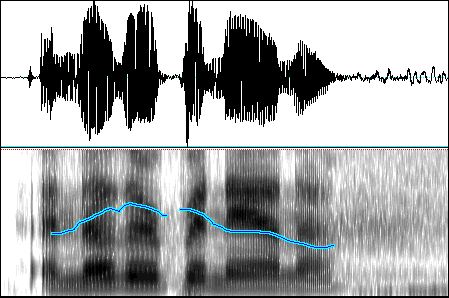
another_banana.jpgIt’s a strange expression for me to use, “watching my language.” Especially since I am a linguist, and study language professionally. And actually spend time looking at visual representations of speech. But that’s not what I’m talking about.

(Warning: this post contains “language.” And by that, I mean l*ng*ag*. You know, %$*#! words. So if you are my mother-in-law, or someone else offended by such words, please read no further. Actually, if you are my mother-in-law, it’s not really me at all who’s writing this. I have no idea how this post got here. In fact, this whole blog must have been written by someone else who coincidentally has my name.)

I was reading a message board message a little while back, and came across a message where someone had written “cr*p”. Yes, c-r-*-p. And all I could think in response was “holy fucking shit, crap is a bad word??”

Crap is a word I use fairly often. As in Oh, crap, I forgot something. Or I have a lot of crap to deal with. I mean, I realize that it more-or-less means shit. But I thought it was way less of a swear-word. Stronger than doodoo, certainly, but really quite mild. I may even have said crap in front of my mother-in-law. And my mother-in-law feels quite strongly about swearing. As in it upsets her. She didn’t like the movie “Titanic” because someone uttered the word shit in it. (There are plenty of reasons not to like that movie, but quite honestly, shit wasn’t even on the radar for me.) And I really don’t want her to find out about this blog of mine, as I’m sure it would upset her. Mostly because of my language. I mean, hell, I write the word ass often enough.

And while, as my sister put it, I am unlikely to be considered the Kevin Smith of the blogosphere, I do want to reserve the right to swear on my blog. Sometimes I just feel the need. I’m not trying to offend (I spend my whole life trying not to offend), but I find it liberating to have this uncensored aspect of writing.

But then there’s this whole parenting business. I caught myself saying to Phoebe, “you are so damn cute!” (She is really damn cute, you know.) And I ask myself, is this appropriate child-directed speech?

Anyhow, at some point, like so many before us, we’re going to have to face this issue. It’s obvious that Phoebe now understands many words, and can even produce a few. And it’s only a matter of time before Phoebe starts demanding her damn lunch when she’s at daycare, exclaiming “crap, my blocks fell over,” or telling another small child to hand over the fucking dolly.

It’s not that we swear a whole lot. I mean, it’s not like every other word that comes out of our mouths would need to be bleeped on prime-time TV. But, well, swearing happens. Shit happens. And other terms. In our speech, and in the movies we watch, and the music we listen to. For example, I may want to reconsider singing along to “Don’t fuck me up (with peace and love)” by Cracker lest Phoebe picks up on the words…

One option we have considered is to go the Battlestar Galactica route. They have cleverly and subtly substituted frak for another term. As in Frak off, frak me, frak you, go frak yourself. No frakking way.

So, please excuse me. It’s time for me to prepare Phoebe’s frakking breakfast.

grammaticality judgments

I started grad school in the fall of 2000, after a few years away from academia. (I spent those years mostly working in bookstores, in case you wondered.) One of the two classes I took that first semester was Syntax I, a rollicking good time of drawing syntactic trees and judging the grammaticality of sentences like:

  1. Fred put peanut butter on the sandwich. (Sure. Sounds grammatical.)
  2. Bob ate the sandwich. (Totally grammatical. Where’s my sandwich?)
  3. I asked what Fred put peanut butter on. (Yeah, it’s grammatical.)
  4. *Bob ate the sandwich that I asked what Fred put peanut butter on. (Huh?)

The class was a rite of passage, as all new grad students to the program (more or less) had to take it. There were also a lot of undergrad linguistics majors in the class. The course was a fair amount of work, with fairly long drawn-out homework assignments. I didn’t find it too hard, just time-consuming to do the readings and homeworks. But most of the students found it quite challenging, it seemed, and many had a lot of trouble with the homeworks.

One day, when our homework was passed back to us, I happened to see that the woman sitting next to me got a score of 100. The same as me. And I found myself feeling surprised. And I was actually quite startled by my surprise. Because I recognized that it was not just about the challenge to my ego resulting from someone else getting high scores. I realized that I was surprised that she, this particular woman, was also getting high scores.

Why was I surprised, I wondered. She was a grad student in my program, like I was. Clearly she had a college degree, was educated. And from the brief interactions we’d had up to that point, I had a generally good impression of her. She was friendly, outgoing, enthusiastic. But I realized, as I reflected on the incident after class as I headed home, that I had been surprised to realize that she was also smart. And I came to the realization that the reason I hadn’t expected her to be smart was that she had a distinct regional accent.

It was disturbing to me to realize that I’d had this prejudice. Me. A student of language and linguistics. I know that the mainstream American dialect, the accent of TV newscasters and movie stars, is just one of many varieties of the English language. No better, no worse. All language varieties are systematic, grammatical. And the variety of a language that a person speaks is no reflection of that person’s intelligence or abilities, but merely a reflection of that person’s history.

But our society (and I’m sure it’s not just ours) places value on certain language varieties above others. People feel, whether it’s conscious or not, that certain accents sound more intelligent than others. To the average American, for example, a person speaking with a “refined” British accent will sound intelligent, even if that person is dumb as a stump. Likewise, many Americans will consider regional U.S. dialects to make a person sound uneducated. Many speakers of regional dialects consciously “lose their accent,” or shift to the mainstream accent, in order to avoid perceived stigma.

I’ve thought about this brief incident from my own past a bit lately, following various topics in my sociolinguistics class. Specifically, I’ve thought a lot about how perceptions about language affect speakers of non-Mainstream dialects, particularly AAVE (African American Vernacular English). Like the mainstream dialect, AAVE is complex and rule-governed system, albeit with some different grammatical rules than the mainstream dialect. Many people, however, including educators, actually know very little about these non-mainstream dialects. Instead, they often assume that speakers are speaking ungrammatical English, or that the speakers are even somehow deficient cognitively. The impact of this can be particularly harsh on young children starting school.

It’s hard for me to admit that I’ve also been susceptible to subtle linguistic prejudice. But this awareness has opened my eyes to the real risks of discrimination to children and other speakers of non-mainstream varieties of English. And I’m heartened by the fact that many Universities now require teachers-to-be to take a course in linguistics, which hopefully will give them some background knowledge of AAVE and other linguistic variation.

um…uh…what do you mean?

I’m experiencing some internal conflicts. Namely, there is often a gap between how I want to be spending my time, and how I should be spending my time. One thing I want to be doing is writing for fun. One thing I should be doing is writing for work and school. So sometimes I try to reconcile these by writing for fun and work. So in the interest of reconciliation, I bring you…the filled pause.

As part of my work and study, I do a lot of transcriptions (of various types: orthographic, phonetic and prosodic) of actual speech. (And by speech, I mean people speaking. Not speeches.) One of the common features of spoken language (in contrast to written language), is the occurence of what are commonly called filled pauses. In English, the two most common/frequent of these are uh and um (or er and um in British English). These are generally considered to be non-linguistic speech elements, i.e. sounds that we make in the course of speaking that are not really part of the language. However, I just read a really cool article that makes the argument that um and uh should actually be considered words, in particular interjections:

We will argue that uh and um are, indeed, English words. By words, we mean linguistic units that have conventional phonological shapes and meanings and are governed by the rules of syntax and prosody. We will also argue that uh and um must be planned for, formulated, and produced as parts of utterances just as any other word is.

They suggest that the meanings of uh and um lie in their usage, as with other interjections. Whereas nouns, verbs and adjectives will be defined by way of a paraphrase or with synonyms, interjections typically have a description of how or when it is used. Take a word like ouch. Its most common usage is an interjection, and dictionary.com gives its definition like this:

ouch 1 /aʊtʃ/
(used as an exclamation expressing sudden pain or dismay.)

Notice how the definition is in parentheses. Compare this to your typical noun or verb, like, say, ouch (Okay, this is a totally new word for me, too, and nearly as surprising to me as the alternate definition of mother….):

ouch 2 /aʊtʃ/
noun
1. a clasp, buckle, or brooch, esp. one worn for ornament.
2. the setting of a precious stone.
–verb (used with object)
3. to adorn with or as if with ouches.

So the authors of this article (Clark and Fox Tree, 2002), suggest that uh and um are words with meanings that can be defined in terms of their usage: to signal that the speaker is expecting a delay in speaking. Further, they go on to elaborate that uh is used when the speaker expects a shorter delay before resuming their speech than for those cases when um is used. They found evidence to support this in several spontaneous speech corpora. They also discuss various implicatures (in the Gricean sense) associated with using uh and um, including many which have been explored in the literature. For example, a speaker may use a filled pause (or filler) to implicate difficulties in speaking (um…it’s the…doohickey…uh…um), or a desire to hold the floor lest someone else tries to get in a word edgewise (um…hello, still speaking here).

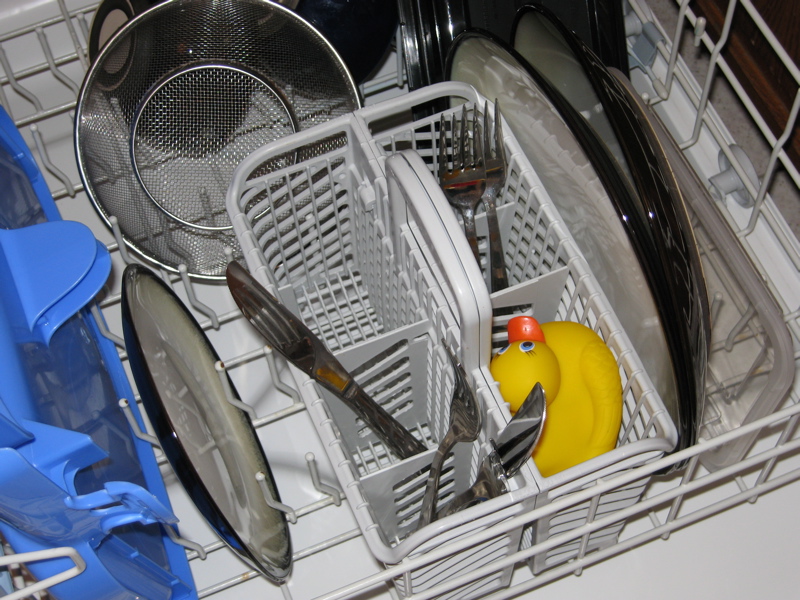
Anyhow, I found their arguments to be quite compelling. And considering um as a word squares quite nicely with my own recent awareness of written uses of um. I’ve found myself using um occasionally in emails, or in blogging, or blog comments. I use it to signal discomfort, or perhaps even embarrassment. For example, considering the following totally hypothetical comment exchange in response to an entry I’ve written about a childhood memory or finding a duck in the dishwasher:

comment from “Bob12497”:
Great post, and great layout! I agree with everything you say. I explore similar topics on my website.

comment from me:
Hi, Bob12497-
Um…thanks.

Or consider the following hypothetical email:

Hi, Bob-
It was great seeing you at the meeting this morning. As you could probably tell, I was very enthusiastic about our upcoming goals and my commitment to participation in these new projects. Um…could you remind me what the new projects are about?

Anyhow…um…I should probably get to some cleaning. The squirrels have started complaining about the clutter.

References:
Clark, H. H., & Fox Tree, J. E. (2002). Using uh and um in spontaneous speaking. Cognition, volume 84, 73-111.

Snodgrass, G. & McSnorfle, Q.R.S. (2007). “Managing your duck in the dishwasher.” Unusual Duck Sightings Weekly, volume 23, pp. 23-99.

There’s a duck in the dishwasher.

These are words I spoke soon after arriving home last night. “There’s a duck in the dishwasher.” And as is a common curse with those working in linguistics, I (sometimes) actually listen to the words that come out of my mouth. “There’s an unlikely sentence,” I said to John. And googling “duck in the dishwasher” in fact brings up only one (two if you count the archive of the same) hit, with the following line: “…and so before I clean the duck (in the dishwasher) I first have to squeeze the water out.”

So I bring to you this duck in the dishwasher. My own duck in the dishwasher. (Thus increasing the frequency of the sequence of words “duck in the dishwasher” on the web.) And I hope to start a collection of highly improbable-sounding, but spontaneously and appropriately contextually-oriented, sentences. So if you have any to share with me, please do so. (Before you duck in the dishwasher.) (Did I mention I need to nap? Haven’t done that yet.)

duck.jpg

And by the way, this post is largely an excuse to set up my Technorati Profile.

…and then she was all like “that’s what I’m sayin’. Quotative ‘be like’ is used all the damn time.”

A couple nights ago, I posted a bit about the quotative use of “be like.” That’s the usage of the verb to be plus like to signal a quotation, like in the following constructed example:

So I ran into this guy I know, and he was all like “hey, baby,” and I was like “huh? what’s your deal.”

So I posted some stuff, based on some reflections I’ve had about an assignment for a class I’m taking. (And by the way, I haven’t yet done the readings relating to that assignment. There’s actually fairly extensive literature on this topic.) And anyhow, a friend of mine from school made some interesting comments. She uses the quotative “be like” as an example to illustrate prescriptive vs. descriptive grammar with her intro to linguistics students. Here’s some of what she says:

Two points I make are: 1) quotative “be like” is used far more widely and by much more of the population (and extends into much older segments of the population) than we assume, 2) quot. “be like” could be grammatical someday. Both points surprise the students.

She’s got her students keeping an ear out for uses of the quotative “be like,” and particularly paying attention to the age/generation of the speaker. (‘Cause she’s all like, “I totally use ‘be like’ all the time, and I’m as old as dirt.” Well, what she said was that she has “fallen out of the traditional ‘youth’ demographic.” As so many of us have fallen.) Maybe we’ll get to hear more about this later. (I mean, the use of “be like” across generations, not the falling out of demographics.)

As far as the second point goes, I totally agree that the quotative “be like” could be grammatical some day. I actually expect it will be. What with the way its use is ramping up, I don’t even think it will be that far in the future. My friend comments that she believes that the use of “said” is already getting rarer, and that she expects she only uses it in more formal situations. I would posit that it’s not only about formality. It actually serves a function that isn’t directly covered by other verbs in English. I mean, it allows you to quote someone without committing to the actual verbiage. I guess we could otherwise say “said something like” or “thought something like,” but really I think “was like” means “spoke words and/or produced gestures and/or had thoughts indicating an attitude/reaction/emotional state that could be characterized by the following linguistic expression, which may or may not have actually been uttered by the person to whom it is attributed.” The verb “say” implies more of a commitment to actual spoken words, while “be like” doesn’t. I’m imagining possible dialogs (which I apparently enjoy doing…):

A: He was all like “you suck.”
B: Did he say that?
A: No, but he gave me that look.

vs.

A: He said “you suck.”
B: Did he say that?
A: WTF? Are you actually listening to me? Yeah, I said he said it. You suck.

Okay. There are my musings for now. I still have some fun googling results to share, but right now I think I’m going to try to get a wee bit of a nap. (Phoebe woke me up around 5:00 this morning.) And then I should probably do some of my actual work.

…and I was like “dude, that’s the quotative use of ‘be like’.”

As I mentioned recently, I’m taking a class. While it’s been a bit of a trip getting back into the swing of attending classes, I’m actually enjoying the class. It’s a sociolinguistics class. A course I’ve been wanting to take for years. I missed taking it as an undergrad, though it was very relevant to one of my majors (linguistic anthropology). (It was offered only every couple of years, and happened to be offered the semester I was studying abroad.)

Anyhow, we’re going to be doing some sort of assignment on the quotative use of be like in English. That is, the use of the verb to be + like to mean, more-or-less “to say.” As in:

I was talking to this guy, and he was like “what’s that all about,” and I was like “How the hell should I know.” And he was like “get over yourself.” And I was like “whatever.”

Of course, this does not necessarily translate into the following dialog:

A: What’s that all about?
B: How the hell should I know.
A: Get over yourself.
B: Whatever.

Unlike when the verb say is used, using be + like doesn’t imply direct quotation. It usually suggests that the speaker is paraphrasing either a quotation, or an attitude or emotional response. It’s also generally used informally. This use of the quotative be like is extremely common not only in American English, but also in Canadian and British English. In spite of its wide use, it’s not always popular and is subject to some discussion even among those who don’t formally study language.

Anyhow, for my class, my professor is like “find an example. Use Google.” And I’m all like “dude, I can find a gazillion examples using Google.”

So, not satisfied with finding just one example for tomorrow’s class, I find myself wanting to dig into the search. And I thought I’d share some things I’ve learned and stumbled across. First, I found this great example of someone playing with the usage of “be all like,” a variant of “be like”:

…the high court ruled 6-3 that former Attorney General John Ashcroft’s play to put Oregon’s assisted suicide law out of business was unconstitutional. See, Ashcroft was all like, “Physician-assisted suicide is not a legitimate medical practice under the Controlled Substances Act and prescribing such lethal medication violates federal law!” But then the Supreme Court was all like, “Ashcroft’s directive is both unlawful, and unenforceable, and the attorney general has overstepped his authority.”

Here are some issues that come up in looking for use of the quotative “be like.”

  • it can be used with different tenses (I was like “dude”, I’m like “dude”, I’ll be like “dude”…) and subjects (I was like “wtf”, you were like “wtf”, he was like “wtf”, we were like “wtf”, Sally was like “no way,” the governor was like “yuh-huh.”)
  • it can be used with a couple of different modifiers (my mom was all like “yo”, he’s totally like “you rock”, I was just like “oh my god”)
  • In searching for some examples of one tense and conjugation, such as “was like,” you run into, like, a medley of other uses of like (eg. “he was like a sloth” or other, “I thought he was, like, amazing” “what life was like back then”)
  • Not all quotative uses co-occur with quotation marks (He was like, no way.), and not all apparent quotations mean a quotative use (The show was like “Repo Man”)
  • I’ve actually found some other cool stuff in my googlings, but since I have to go to bed. I’ll spare you. For now, that is. (Bwa ha ha ha.)

    morning cup of funny

    Good morning. I would like to share with you this, which has made me laugh before 10:00 a.m.:

    The Ad Generator

    When I used it, I got catchy slogans like:
    “Smile less” and “It’s everywhere you say to make.”

    Thanks to LGM for pointing me this way. (John says I should say hat tip. But it’s a new term for me. So I should practice using it in a sentence first. As in “John told me I should say hat tip.”)

    I’d also like to point out that this looks to be a case of Computational Linguistics in action, and used for good (and not evil). It probably uses some sort of n-grams and conditional probabilities. (And also photos from Flickr.)

    The generated slogans also remind me of things you might fight with Engrish text. (Another fun website. You must check it out. It’s everywhere you say you make.)