Darling buds of December

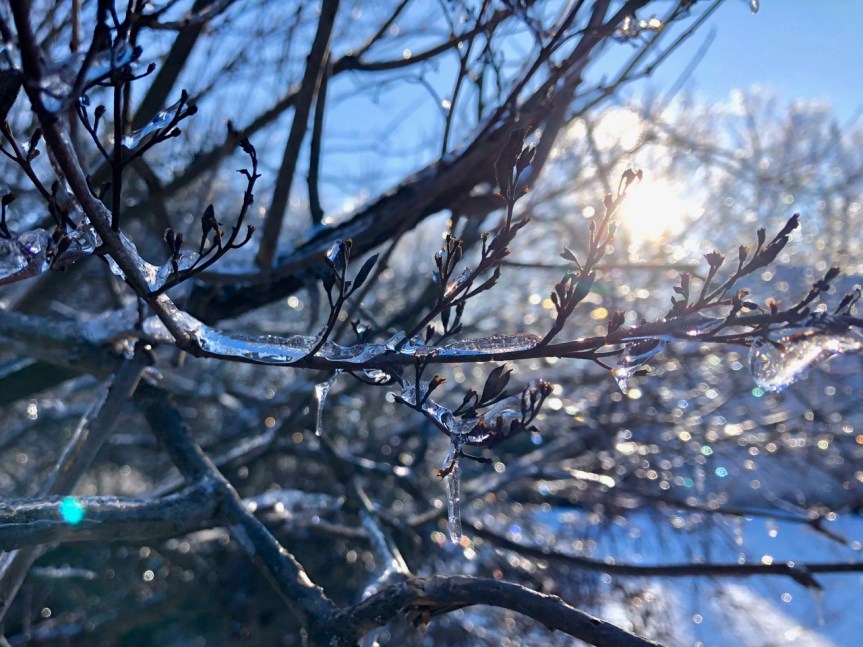
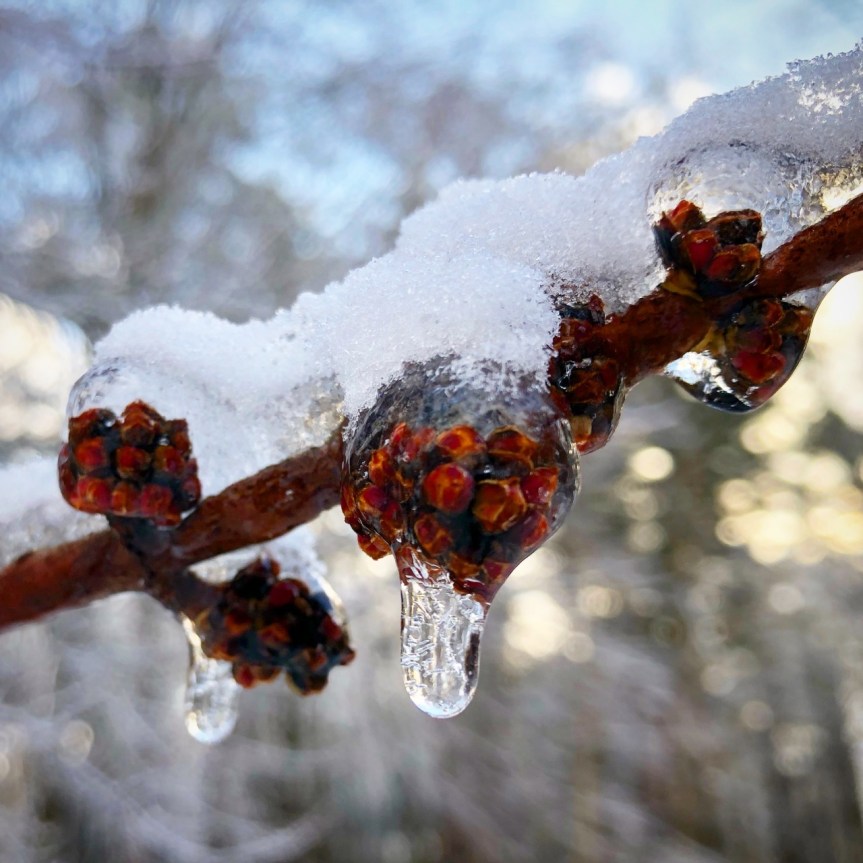
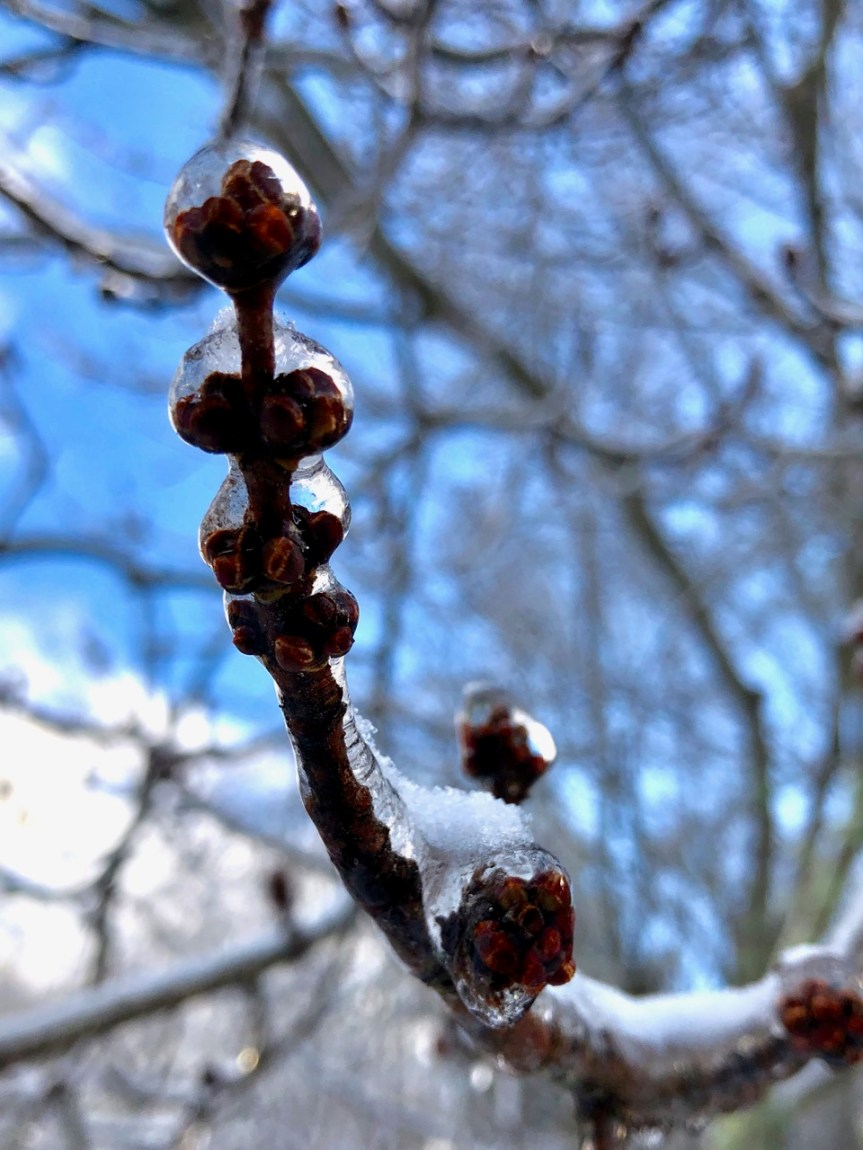
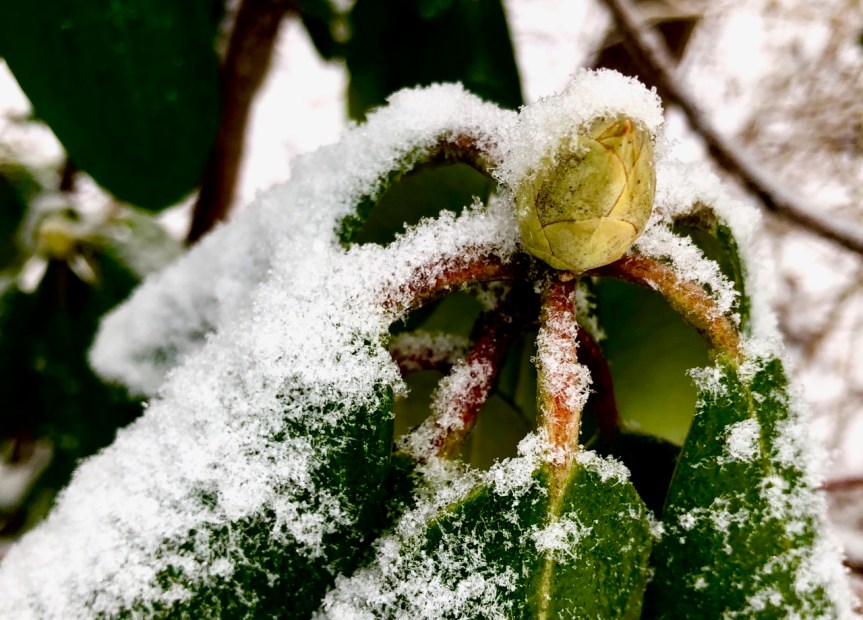
The buds of May are many moons away, but I have been appreciating the promise held in the buds I see on the trees and shrubs now. I am especially drawn to their little budding forms when they are encased in ice and/or dusted in snow. buds7

buds1

buds2

buds3

buds5

buds8

rhododendron-bud-snow

Most of these were taken on various morning walks with the dog this month. (The combination of morning light and post-ice-storm sparkle can be totally mesmerizing. I’ve been caught in its particular snares before.)

3 disconnected photos

Today was a largely mellow day involving continued cleaning up from yesterday’s dinner. I spent some time putting together some ingredients for rather elaborate (and decidedly silly) blog post that is still only half-baked. Since I don’t want to stay up too much later, I foraged through my photo collections for a few morsels I’d been saving. I came across this set. Well, that’s not exactly true. I came across a similar set of photos: 1) the three little tomatoes in a blue bowl, 2) the 6 red potatoes in a colander and 3) 2 photos of cranberries in a little white bowl. One had 3 cranberries, which went nicely with the 3 tomatoes. But since I took the potato picture last December, I couldn’t go back and only put in 3 potatoes. (And I didn’t think to take any new photos of potatoes as I was prepping them yesterday.) The other photo of cranberries in the bowl had 7 cranberries. And it bothered me that it gave me a set of 3, 6 and 7. So then I realized that I still had half a bag of fresh cranberries in the fridge, and a little while bowl sitting empty on the table. So, yes, I staged the 3rd photo to have the bowl contain 9 cranberries so I could have the photos contain 3, 6 and 9 oval-shaped red produce objects. A much more satisfying number sequence.


noodly doodle

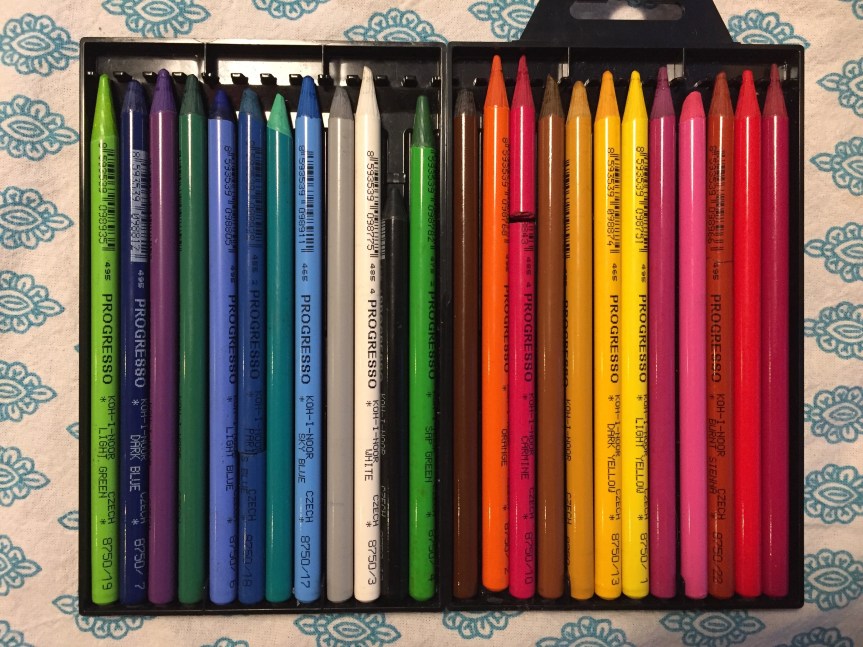
Here is a doodle I made early last year.

doodle-pencils

I wanted to tie things together with yesterday’s loose threads.

This slideshow requires JavaScript.

(It’s fun to weave my posts together.)

colored-pencils

spider, bird, party

You might be wondering about that seemingly random list of words: spider, bird, party. In my head, they aren’t random, though. They have a sort of roundabout connection.

For a start, our house is still decorated for Halloween. We kind of went all out this year, as the kids hosted a bit of a party for some friends a couple of weeks ago. And one of our major Halloween decor themes is spiders and their webs. Here’s a sample.

spider-and-web
Giant spider and web.

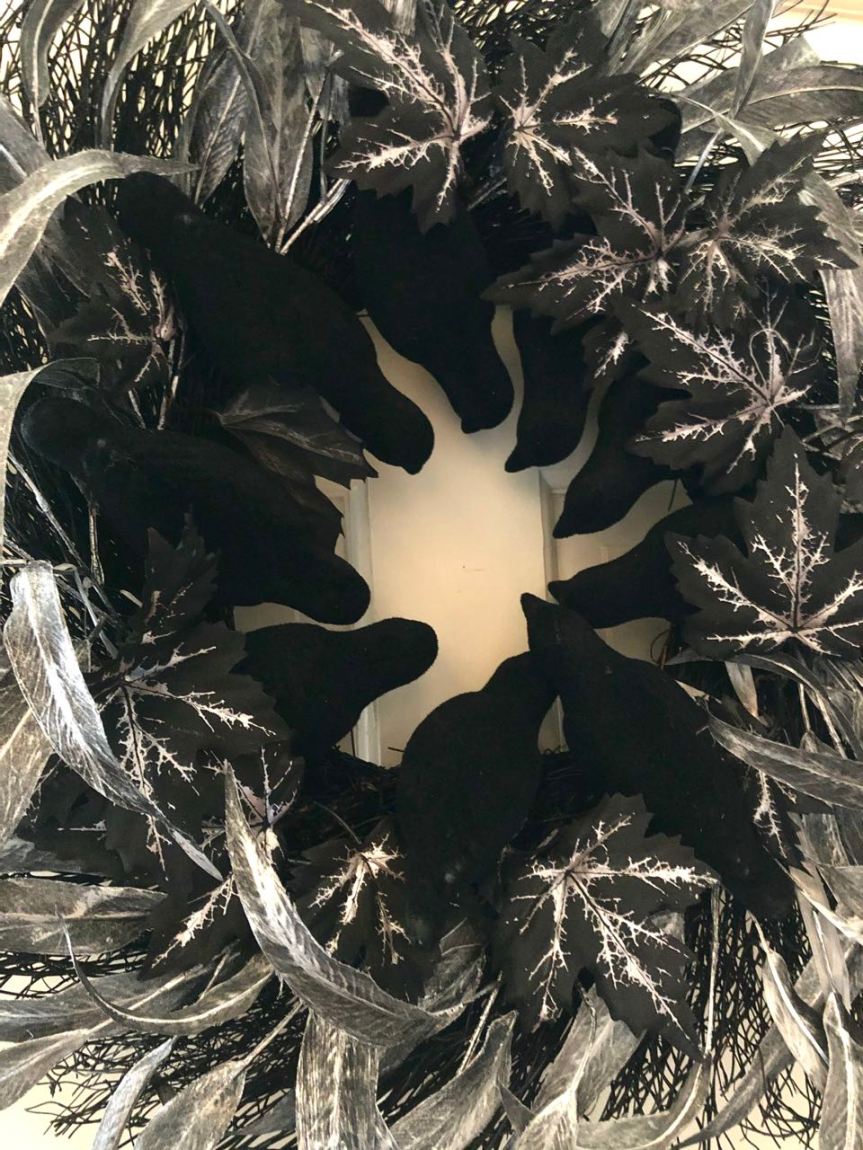
We also tend to have a lot of bird-related things. For Halloween, we have some various crow, raven and black bird items, such as the wreath below.

bird-halloween-wreath
A wreath of black birds.

But aside from that, the connection between the words for me is a bit more of a tangle. Yesterday’s photo of a bird statue with a spider web reminded me that the words for bird (ptak) and spider (pająk) in Polish are two that I have gotten mixed up before. In case you are wondering why I have had the occasion to mix them up at all, I’ve been casually studying Polish using DuoLingo. (I had a conference in Poland last year, and I started the study as a bit of preparation for the trip. And I’ve just been continuing, with no concrete goals aside from learning some of a new language.)

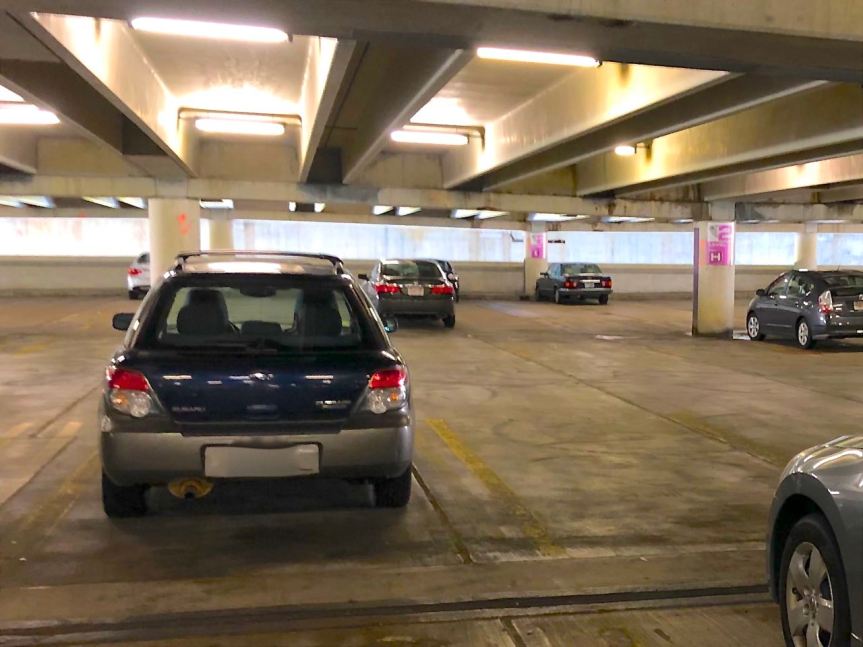
But thinking about the various ptak and pająk items we had up for our party also reminds me of the most surprising word I’ve learned so far in Polish. The word impreza means party. It just so happens that I have been driving an Impreza (a Subaru Impreza) for the last 14 years, and had no idea it was a party.

Below is a photo I happened to have in my phone of the impreza.

impreza
Impreza: a party?

(I sometimes take a photo of my car in parking garages to remind myself of where I’ve parked. Usually I delete it afterwards, but I happily I still had this one. Because what’s a party if you don’t have photos to show for it?)

So there you go.

fashioning a fascinator

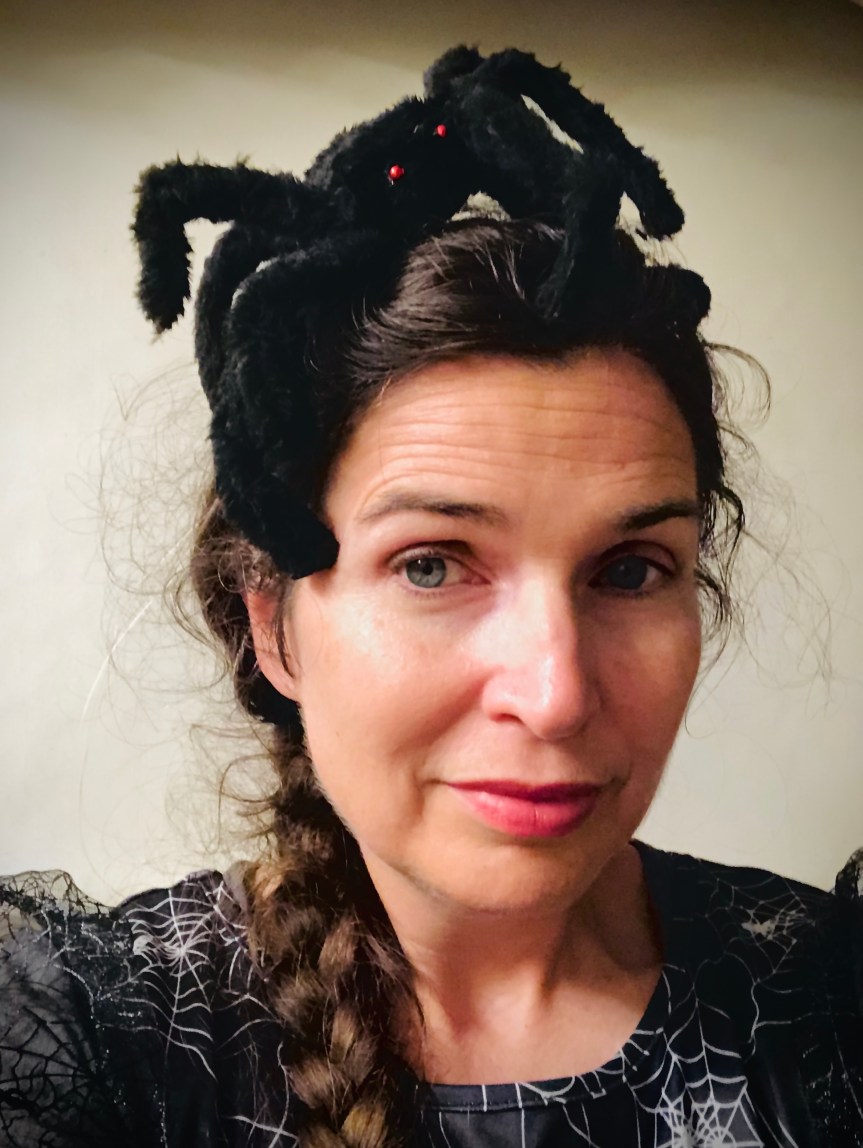
I’m rather fascinated by the term fascinator. It’s a much more fanciful expression than “funny little fancy hat.” In any case, I fashioned myself a fascinator from a fluffy little friend. Well, really, I just took one of our many spider decorations, and fastened it atop my head. I felt it worked just fine.

spider_fascinator

I don’t often post photos of myself on this blog, but when I do, there tends to be some sort of creature on top of my head.

bringing ideas to light

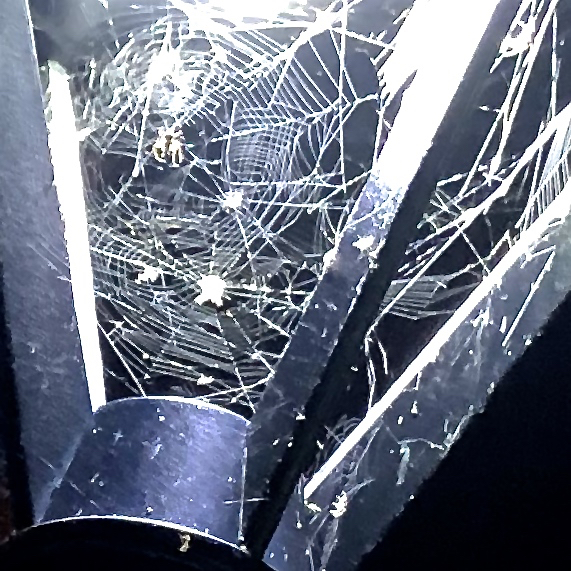
I was hoping that posting daily again would bring some ideas to light. For a start, I had the idea to look for some photos of light. I found this one, which I think shows that some spiders had a pretty bright idea (if spiders can be said to have ideas).

streetlamp1

streetlamp2streetlamp3

If these aren’t examples of effective web design, I don’t know what is.

plugging back in

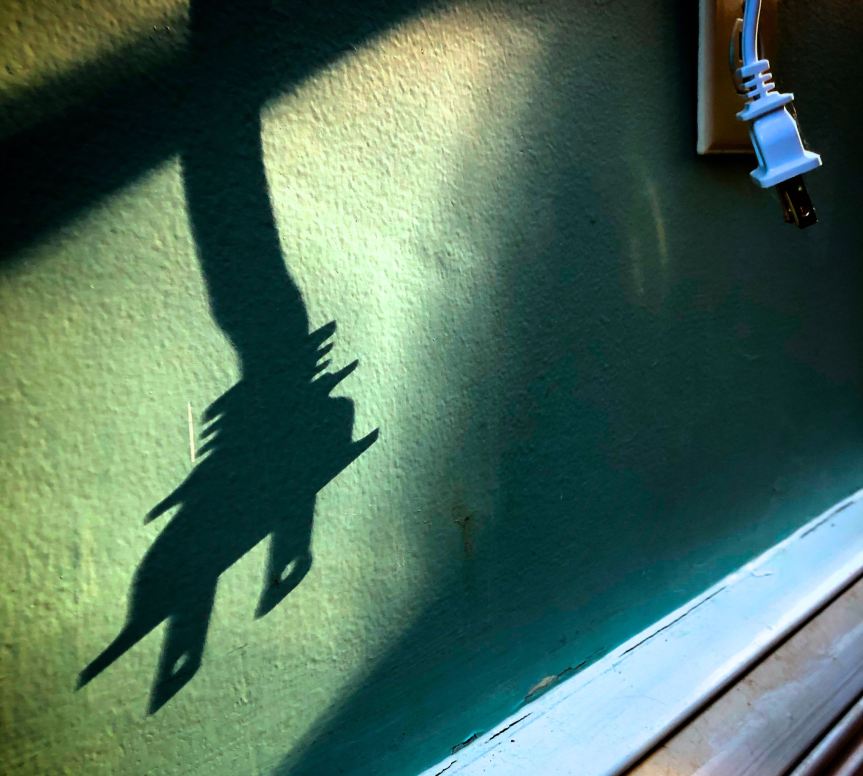
unplugged

As I said yesterday, I’ve missed using this creative outlet. I’ve been unplugged from it, as it were. So I’ve decide to plug myself back in, and see what kind of ideas come to light.

a new leaf (all over again)

leaves-in-morning-light-110119

November brings fallen leaves and the reminder that I once used to blog daily for the month for NaBloPoMo. It seems like that isn’t so much of a thing these days, but I’ve always been a sucker for tradition. Plus I’ve missed using this creative outlet, so I’m going to give it another go. I’ll at least drop a few leaves here (or photos of leaves).

Speaking out for Science

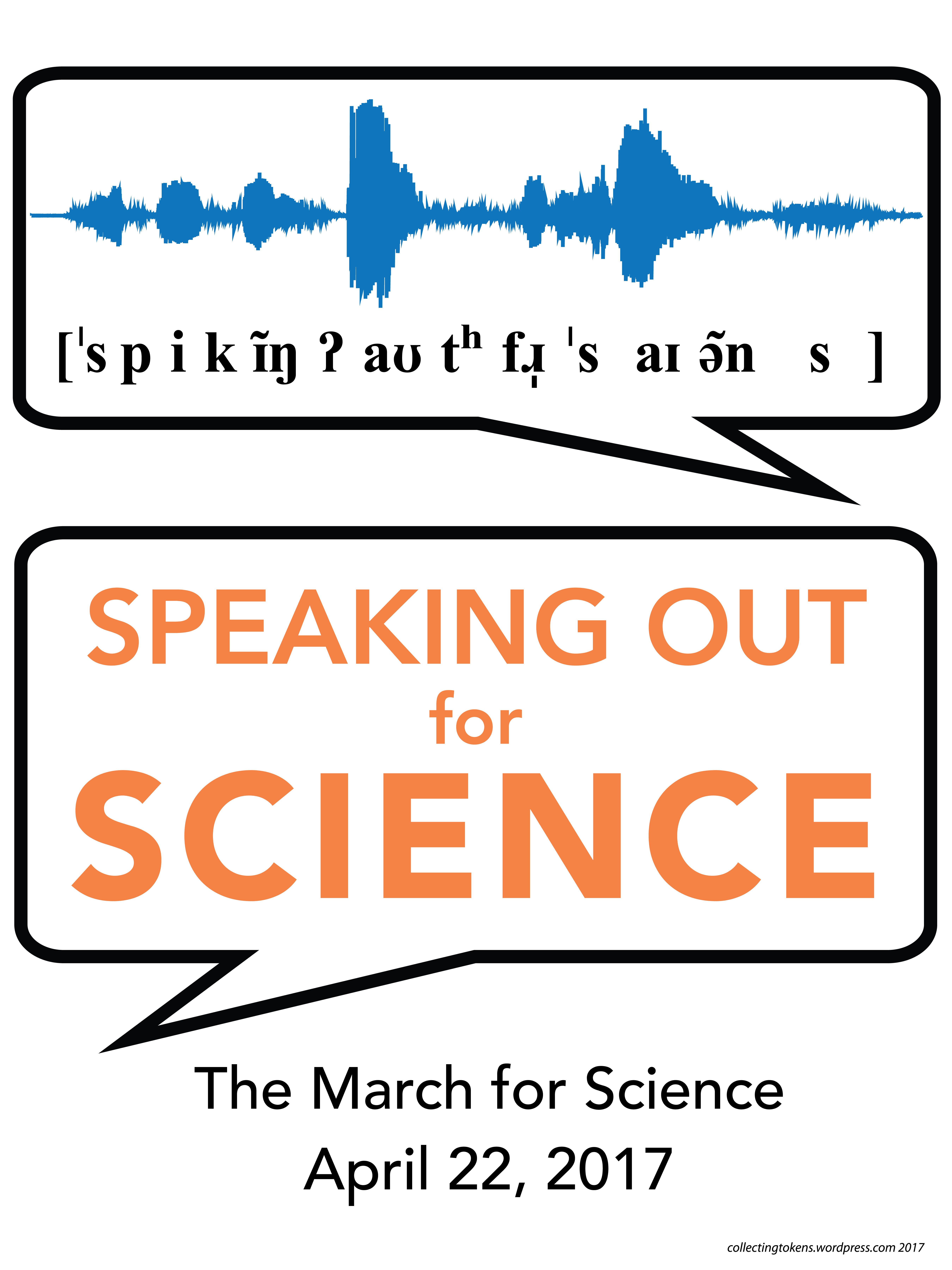
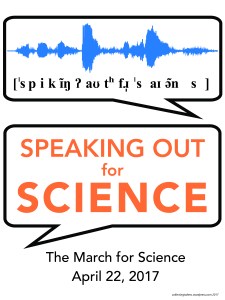
speaking-waveform
Coming up this Saturday, hundreds of thousands of people around the world will join voices for the March for Science. (The main March will be in Washington, DC, and there are 512 satellite marches planned. I’ll be going to the Boston one.)

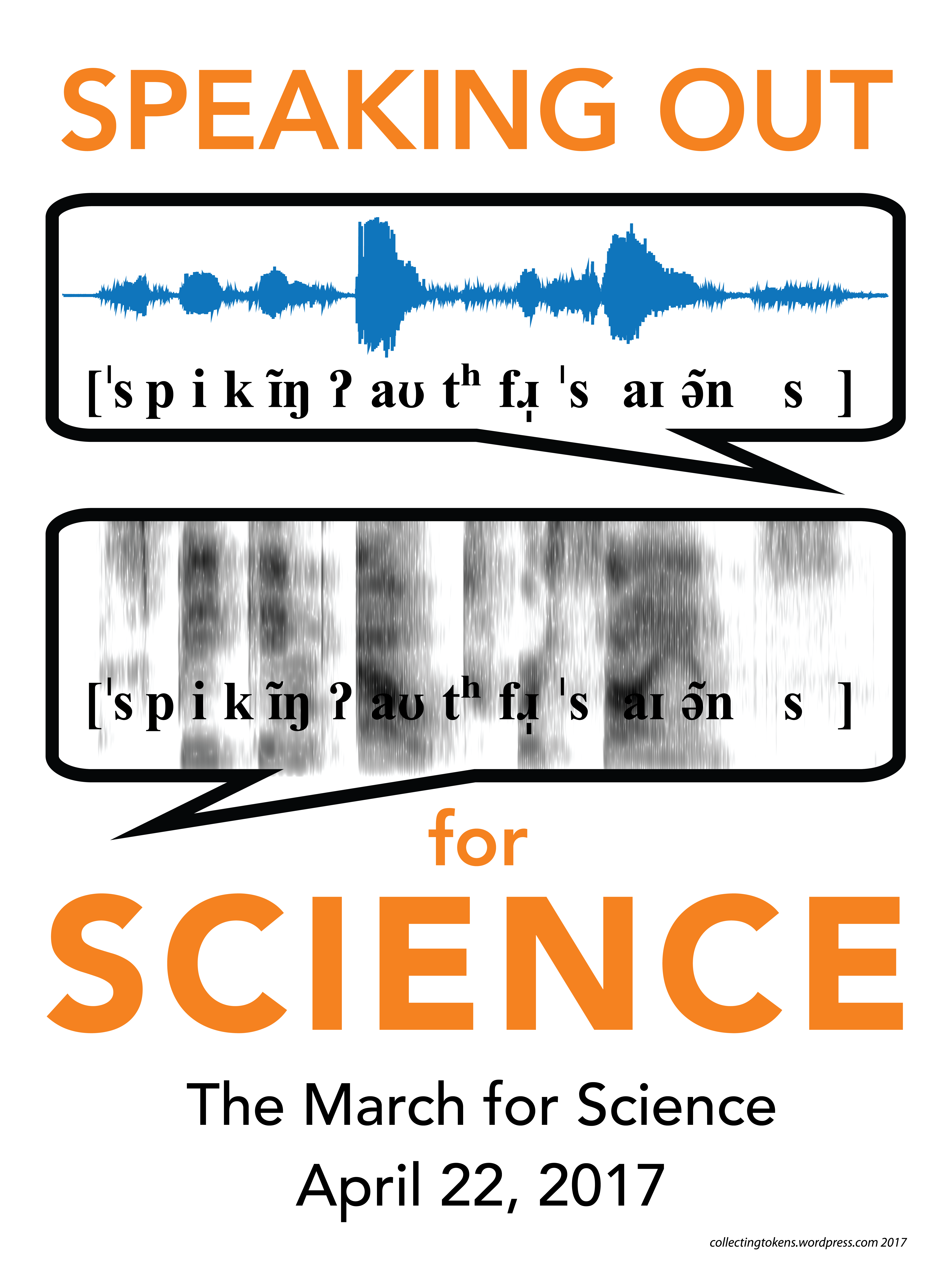
Soon after I heard about the march, I not only planned to go, but started working on a design for a t-shirt and sign. As I am a linguist, I wanted to represent speech and language sciences. I made a recording of myself saying my slogan, “speaking out for science,” and put together a graphic with the (orthographic) text, a waveform, and a phonetic transcription in IPA. I put up a draft of my design on Facebook, and got some feedback from other linguists on my transcription. I made a new recording with some clearer articulation, and put up a new image and transcription. I finalized a couple versions of my design (one with a spectrogram), and set up a storefront on TeePublic (an online t-shirt store), and lo and behold, several people ordered shirts!
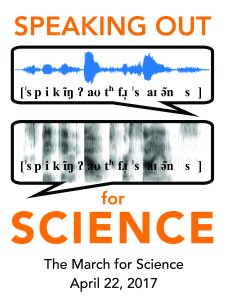
speaking-spectrogram

A couple of weeks or so later, a (linguist) friend of mine shared a photo of herself in her new shirt. There was lots of gratifying positive feedback, but also a few other (linguist) friends of hers said things like “that’s not how I’d say that,” as well as “that’s not how I’d transcribe that!” There was much back and forth about both articulation and use of diacritics. (Mostly centered around the release of stop consonants, if you want to know the nitty gritty.)

While I admittedly at first felt a bit deflated to have the design I’d made for fun get feedback that felt harsher than what I’ve seen from anonymous reviewers on a conference abstract, I realized that there was an opening for a new variation on the design. Because this is what scientists do. We discuss our methods and our data with our peers, and we revise accordingly.

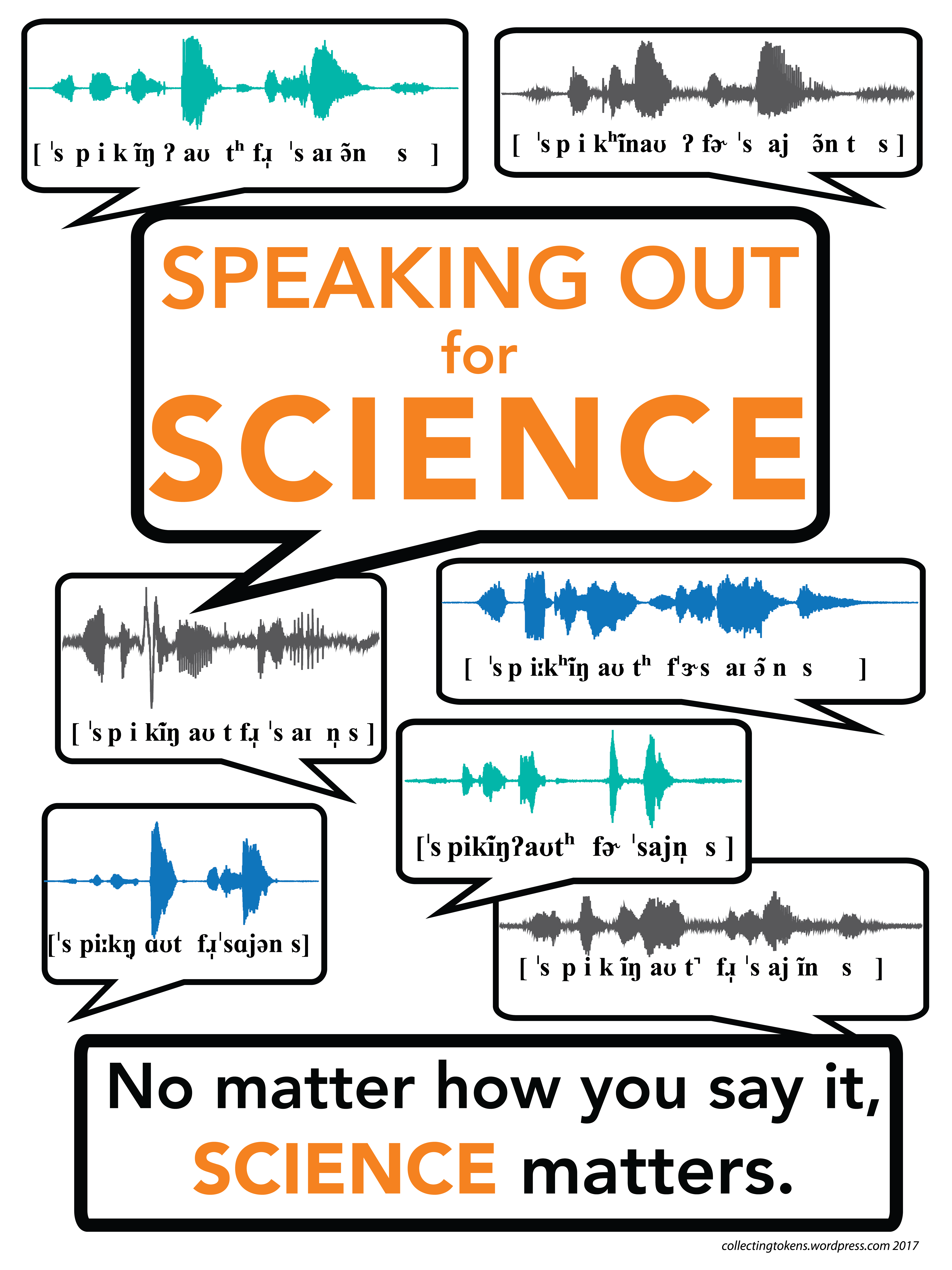
speaking-multispeaker

So I made some revisions. Whereas the possible variation in saying a simple 4-word phrase at first seemed like an obstacle to get around in choosing a representative production to use for my design, I realized that it was an opportunity for a new design to reflect the variation itself. And so I asked my friends and those friends of friends who’d been part of the discussion to submit recordings of themselves saying the phrase, with the option of sending their own transcription. My new design has 7 different productions of the phrase “speaking out for science,” along with a new sub-slogan: “No matter how you say it, science matters.”
speaking-multilingual

And I had another idea for a design to include more languages. I especially wanted to include a non-spoken language. I consulted with a Deaf friend on how best to represent the word science in ASL (American Sign Language). With her guidance, I consulted a few references (including video), and drew and adjusted a diagram to represent the word. I also included 26 other languages, in addition to English. (And I had to consult others again for help with a few of the languages with non-Roman script, including one friend in Abu Dhabi, and another in Bangladesh.)

And so it is that I have 4 different design variations. I have put together some files that are available for downloading and printing, free for personal use, should anyone else want to use them. (I’m planning on making a couple of two-sided signs, each with 2 of the different designs.) Variations of the designs are also available on t-shirts and on some other stuff on TeePublic.

Below are the files, formatted for printing on 18″x 24″ (but scaleable). The png files have a transparent background. Images were created using Praat and Illustrator.

  • Speaking out for Science: Single speaker waveform [pdf png]
  • Speaking out for Science: Single speaker with spectrogram [pdf png ]
  • Speaking out for Science: multi-speaker [pdf png]
  • Speaking out for Science: multilingual [pdf png ]

Let me know if you decide to use one of my signs. And let me know if you have any suggestions for future versions! (Help me get more voices and more languages. For science!) You can always email me at alejna99 “at” gmail.com.

Edited 4/18/2017: I have updated the pdf and png files to hopefully fix font issues that may come up on different computers. Please do let me know if you run into problems with any of the files!