flower, bee, ants

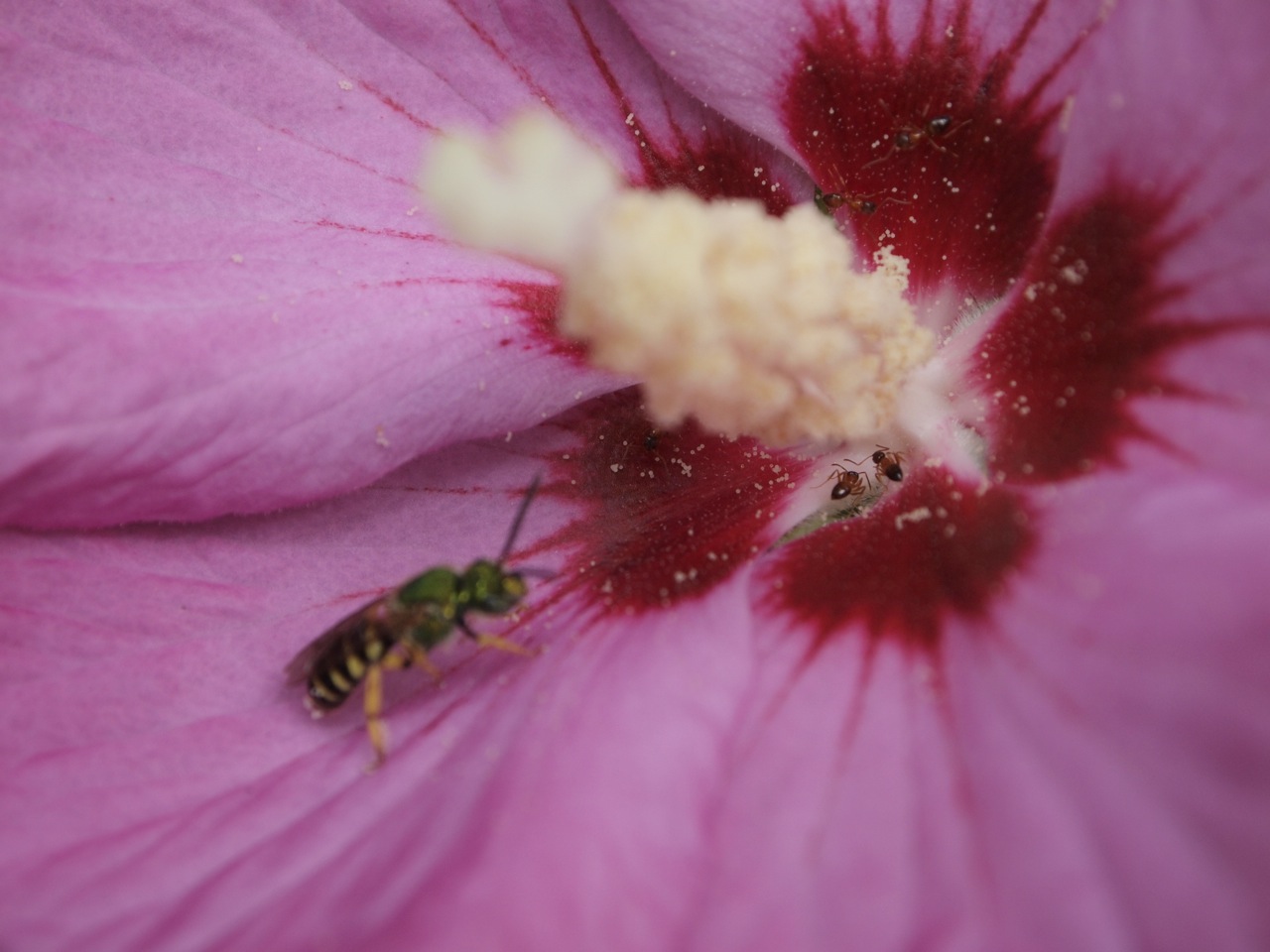
Here’s another flower I came across when hunting for a rose to post on Friday This bright pink flower is another from my in-laws’ house, this time from out in the yard. More interesting to me than the flower, though, was the activity that was going on inside it: a shiny green bee and a bunch of tiny ants were hanging out, collecting pollen, or nectar, or whatever goodies the flower had to offer. (Maybe it was really free beer and pizza. I’m not a botanist, though, so I can’t be sure.)

take it or leave it

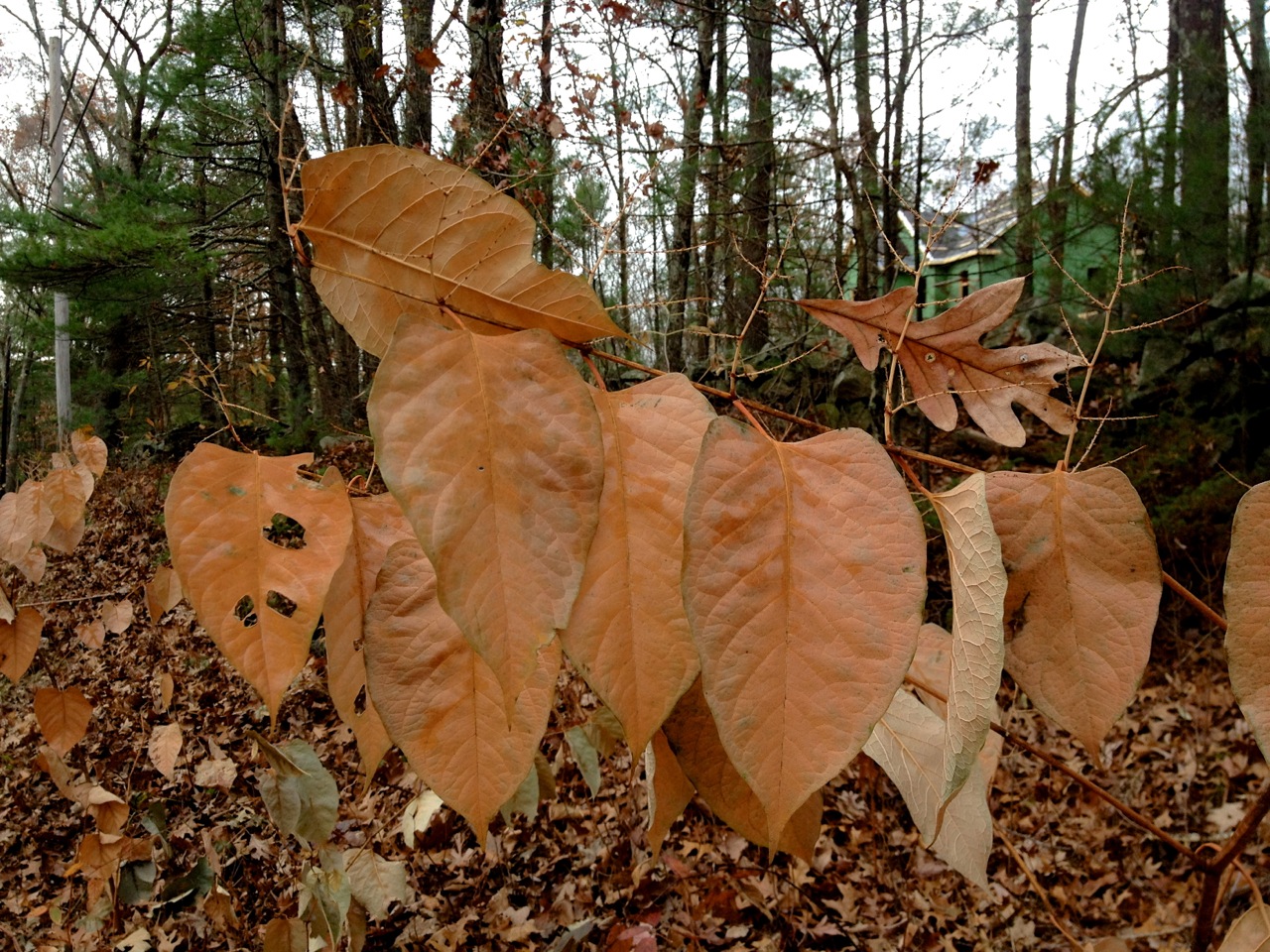
Time ran away from me, as it so often does. Among work and appointments and grocery shopping and a dozen other things big and small, the hours of my day were eaten up. I find myself once more at 11:00 rushing to put up something to post. I had been planning to go all retro and post a ThThTh list, it being Thursday at all, but it was not to be. I still have more work to do before bed, and I can barely hold my eyes open as it is. So, here are some photos I took this morning before the school bus came. These large leaves on some roadside plant caught my eye across the street. Like so many of the plants I photograph, I haven’t the slightest clue what it is. But I liked the shape of the leaves, and the way they dangled from the stems, making a sort of garland.

This oak leaf interloper also caught my eye, trapped in the tangle of twigs over the big stems, and appearing suspended in mid-air.

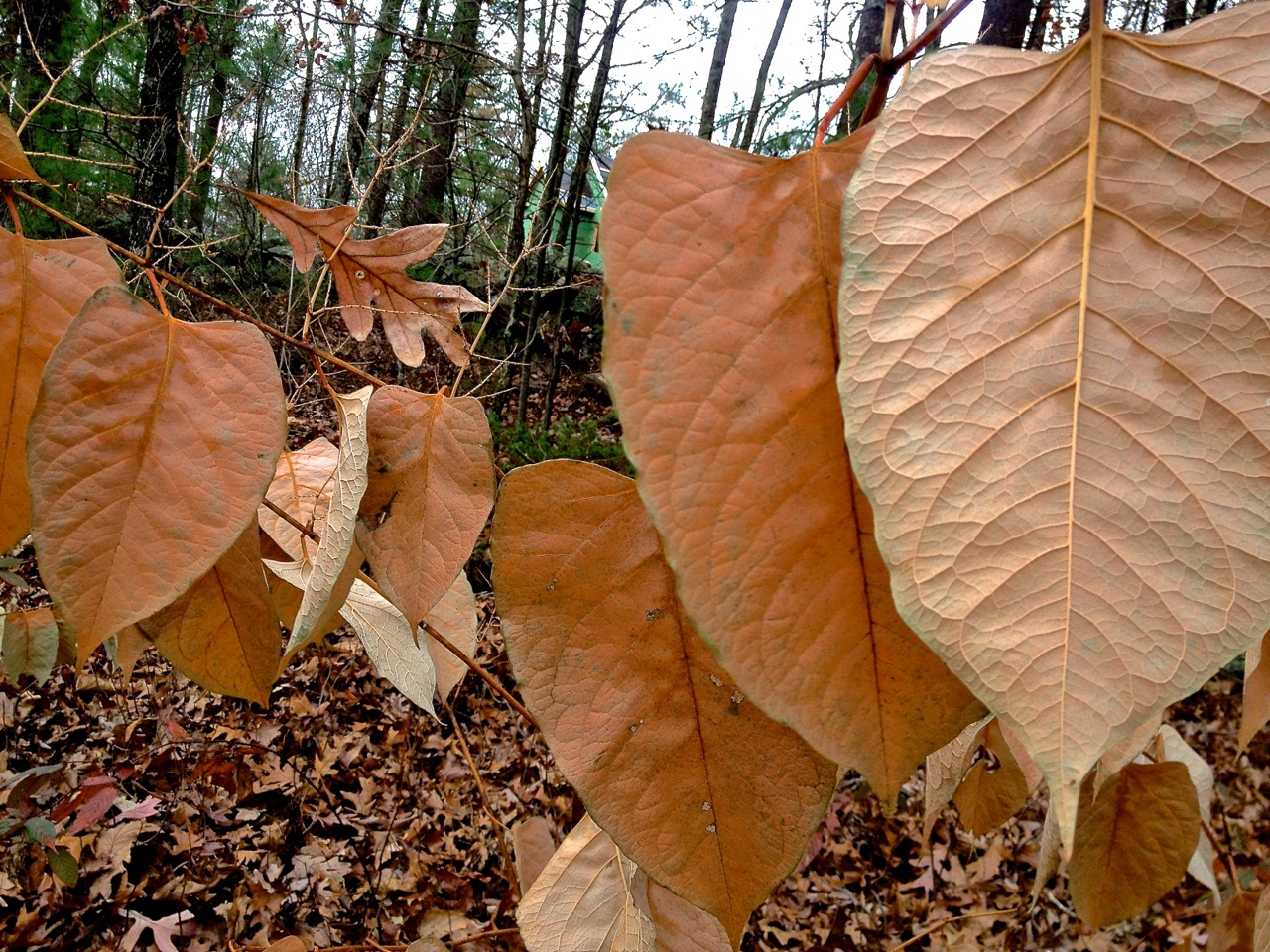
I would also note that some of these leaves were impressively large. If memory serves (though frankly, at this hour, that’s a big if), I believe the front leaf in this photo is about a foot long. That one had flipped around in the wind, making the patterns of its leafy veins more visible.

That’s all I have for tonight.

full-color fall color

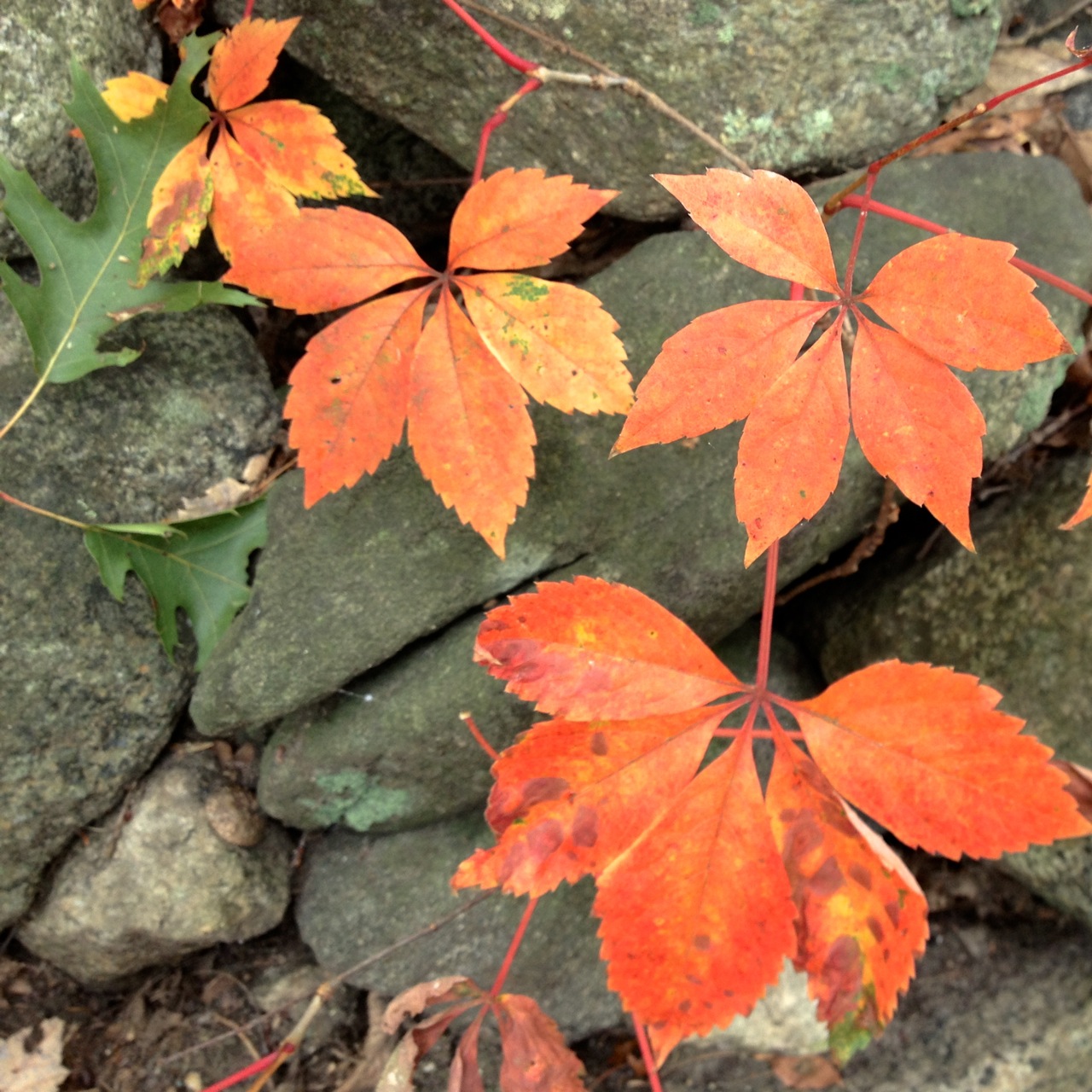
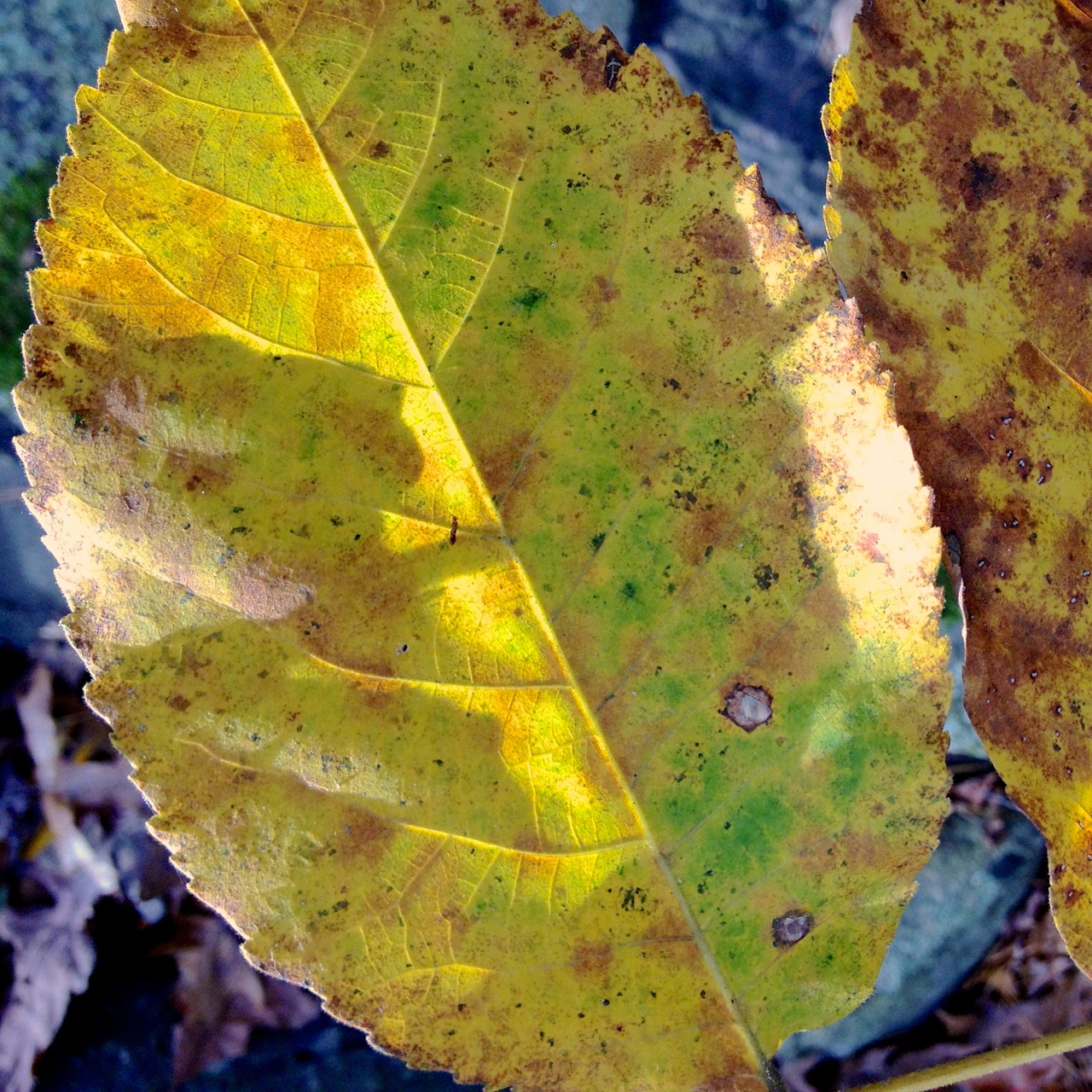
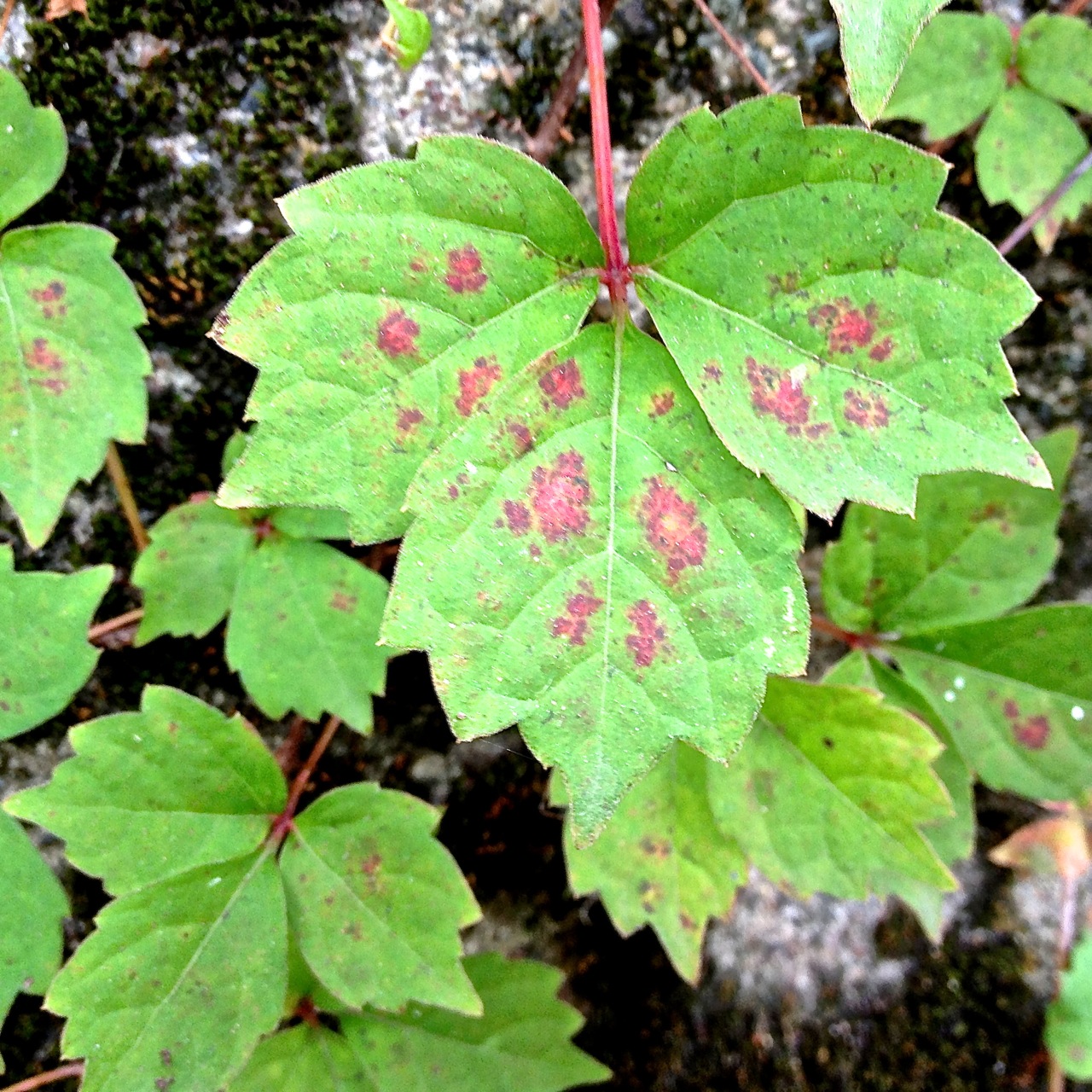
With the gray days of winter looming in the not too distant future, my eyes are savoring the flashy colors of fall. The New England trees are putting on as lovely a show as ever, but the vines and shrubs and even some of the weeds are competing for attention.
red leaves

orange leaves

yellowish leaf

green and red spotted leaves

purple leaves

The first 4 photos are ones I’ve taken with my phone in the last few weeks. The fifth photo is actually one I took with my camera a couple of years ago. I have some more recent photos of this same type of leaves and berries, but the leaves weren’t nearly as purple.

green spaces of Hong Kong (friday foto finder: green)

Hong Kong, one of the most densely populated cities in the world, is known as an urban jungle. But the territory also boasts a wide range of green spaces, which more closely resemble “jungle” than “urban jungle.” When I visited Hong Kong in 2011 for a conference, I enjoyed exploring the urban jungle, and also managed to see a few of the greener spaces. The highlight of these excursions was a hike with my friend YTSL, a Hong Kong local who knows her way around the green spaces of Hong Kong. We met up and took a series of subway rides and buses out to Wong Shek, on the Sai Kung Peninsula. (I wouldn’t have remembered exactly where it was we went, but happily YTSL mentioned it in her post shortly after our hike.)

The day was hot and humid, and also very hot and really humid, but I managed not to pass out. I also managed to take several hundred photos. (Pausing to take a photo is a good way to catch one’s breath.) Did I mention that it was hot and humid? It was all entirely worth it, as the views were stunning, and I appreciated them even through the heat and humidity.

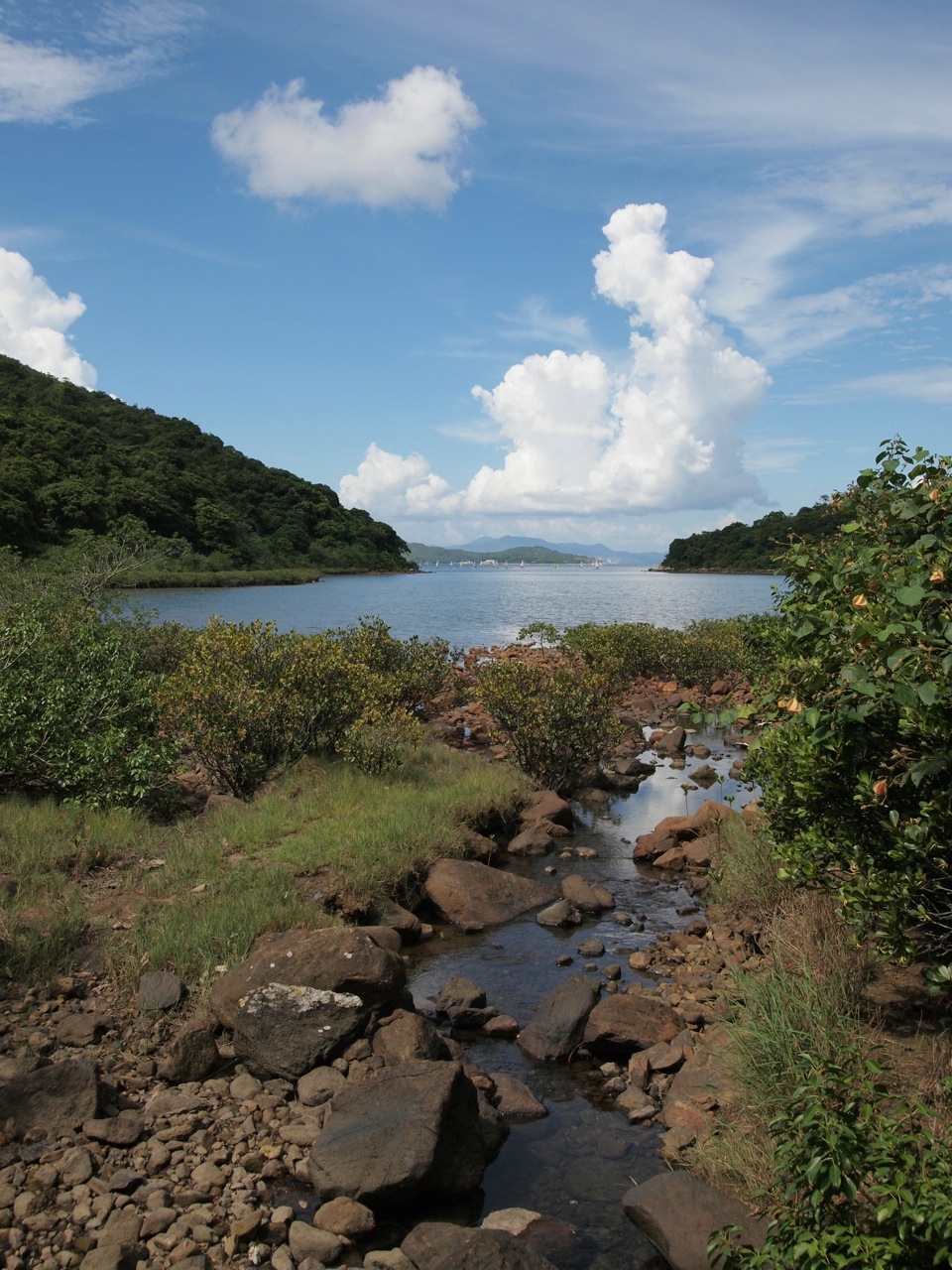
The blue skies were filled with fluffy white rather expressive-looking clouds.

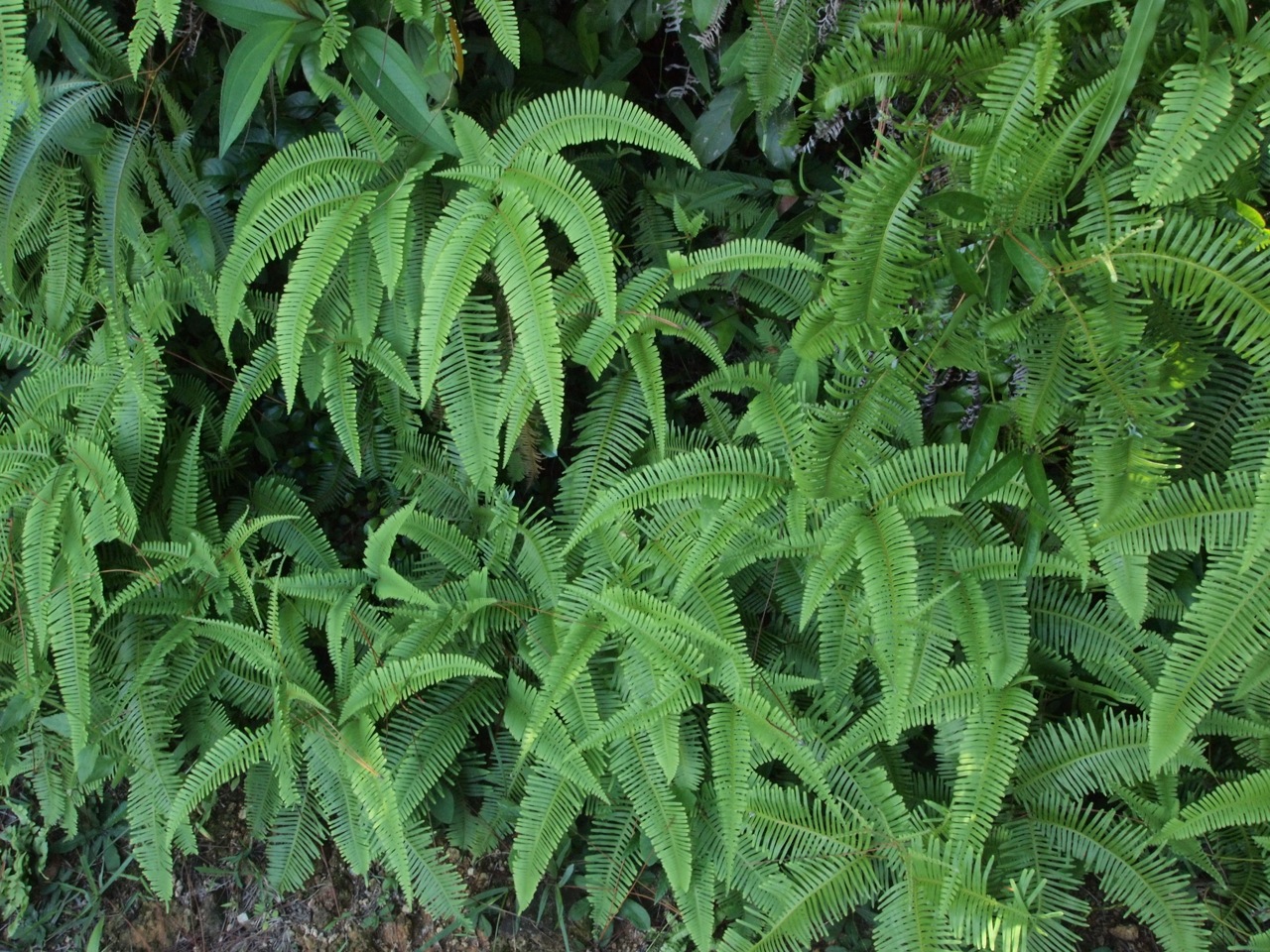
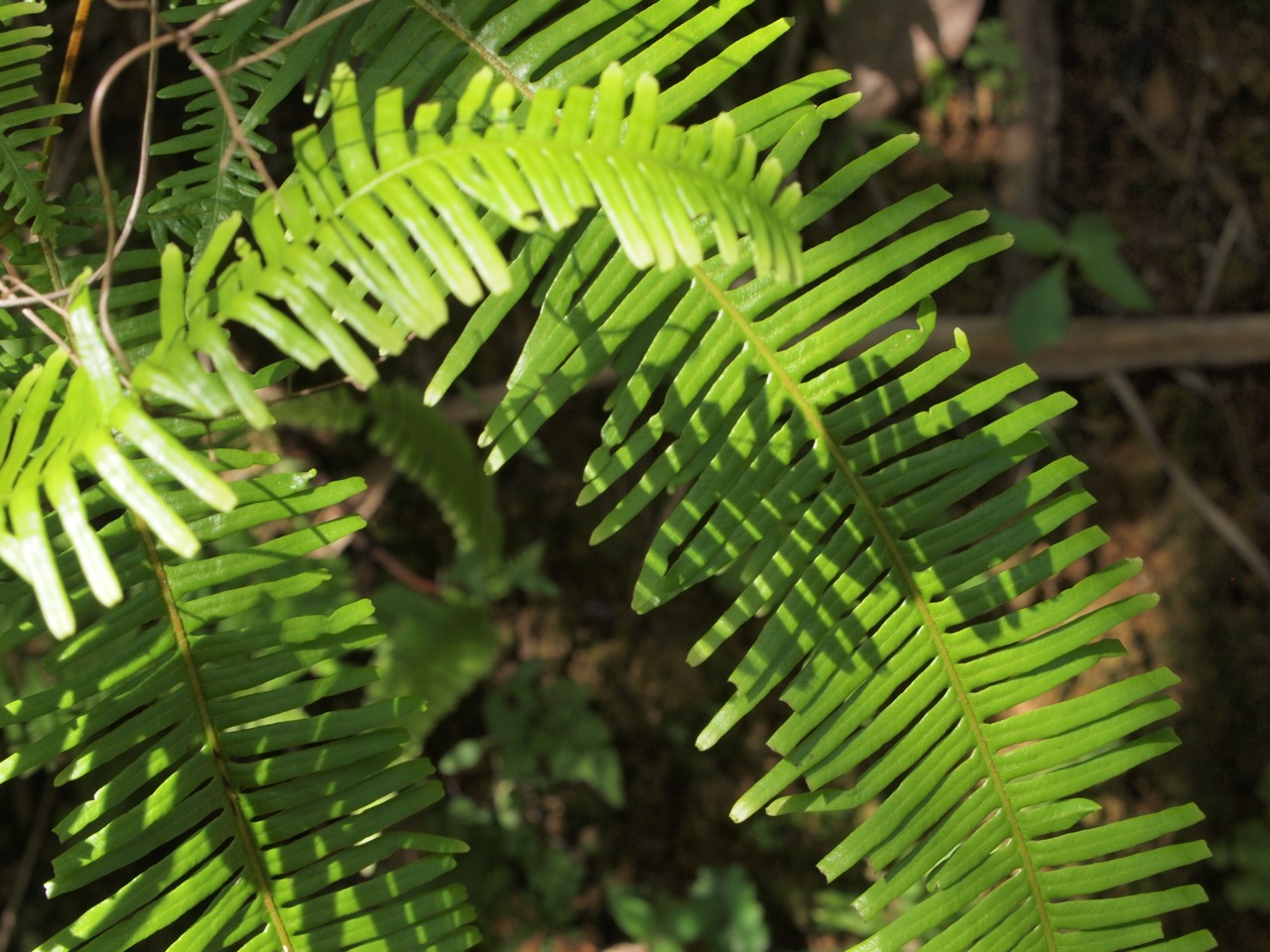
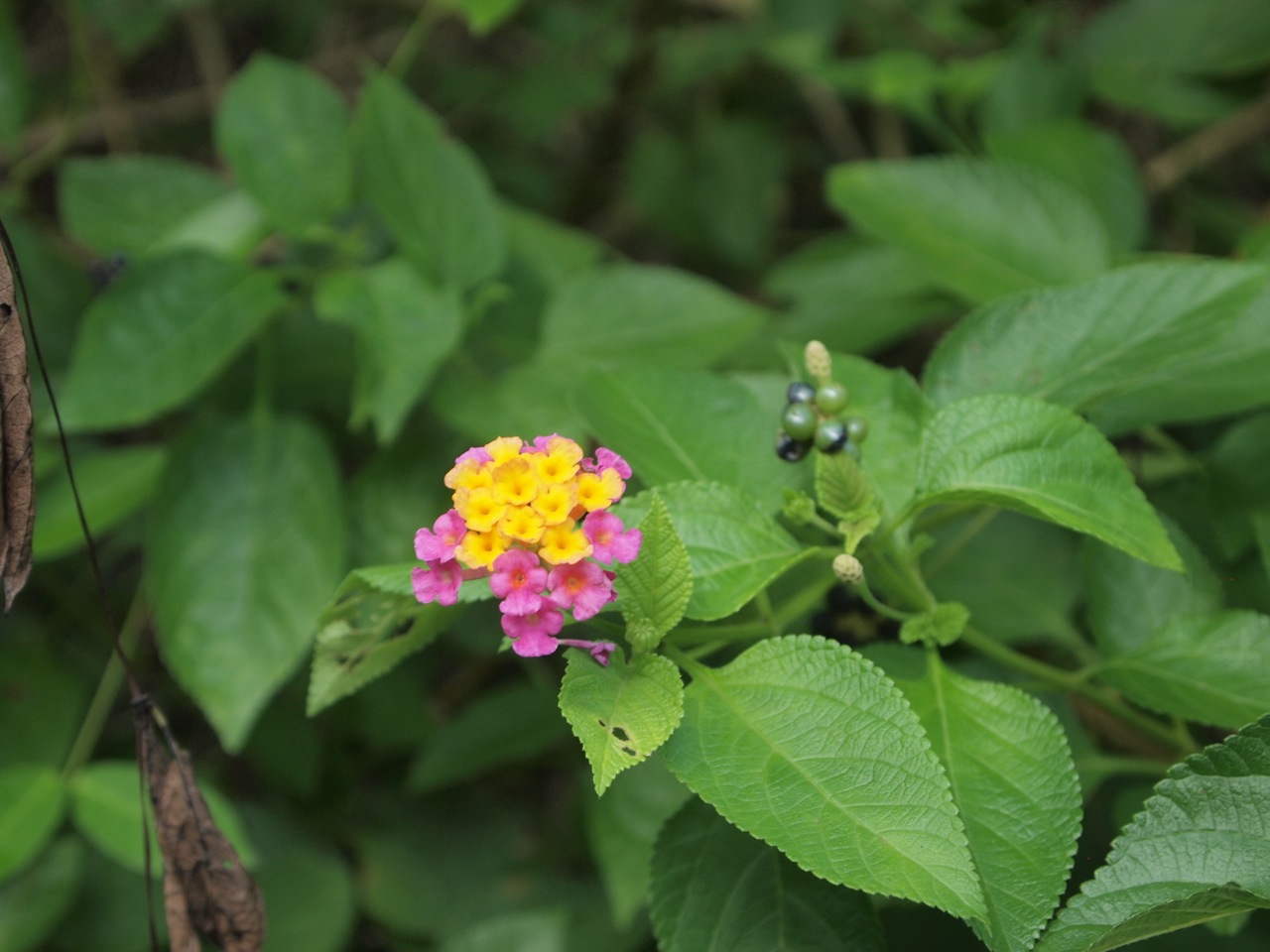
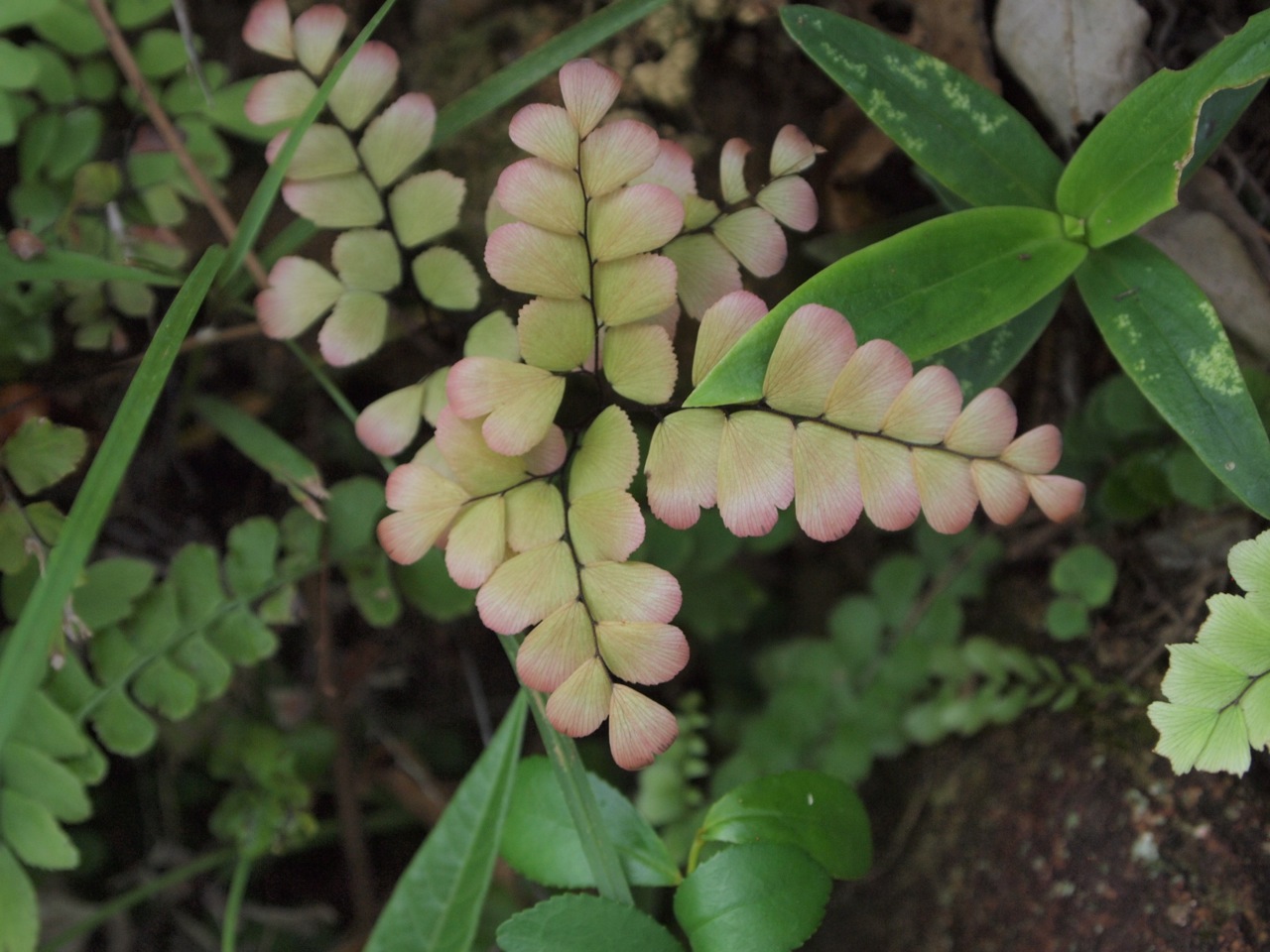
Below the blue and white there was plenty of green to be seen.

There were splashes of other colors, too, among the green fronds.

The path was sometimes narrow, sometimes not, sometimes paved, sometimes not. But always surrounded by green.


A particularly photogenic cloud poses for the camera, trying to steal attention from the picturesque rocks, water and greenery.

We passed a small number of homes which appeared to be inhabited, and more that were clearly long abandoned.

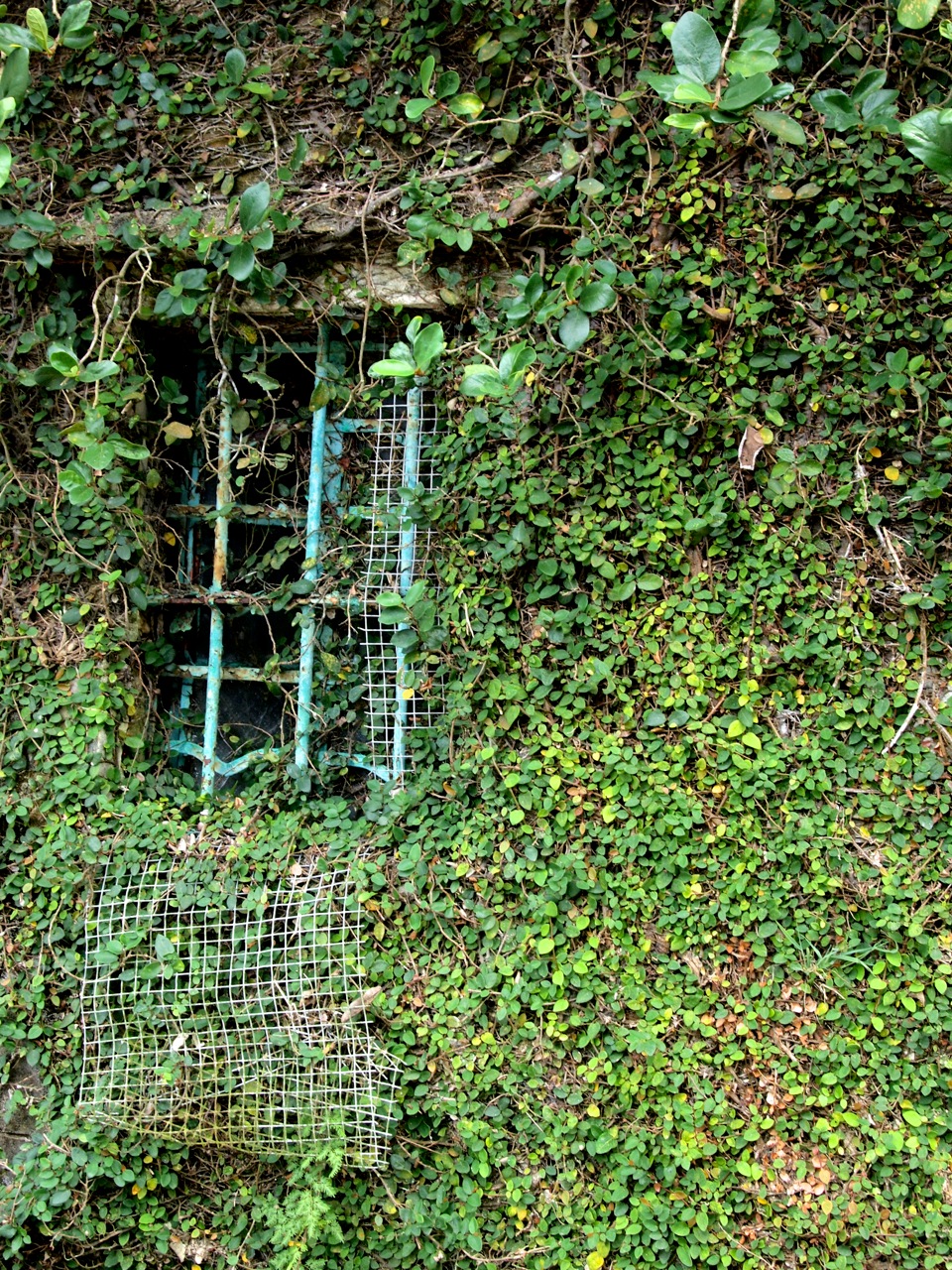
Some of the abandoned buildings were taken over by green.

Our hike finished up with a ferry ride back to our starting point, which offered plenty more beautiful views of green peaks. (A few more photos from the excursion are included below, in the slideshow. And several hundred more are still on my laptop.)

This post was brought to you by the color green, which was week’s friday foto finder theme . Green abounds in my photo library, especially of the local greenery, but it seemed a good excuse to get back to posting some of my long-promised travel photos. To see what other green can be seen, stop by the fff blogfff 200x60

This slideshow requires JavaScript.

the other corpse plant

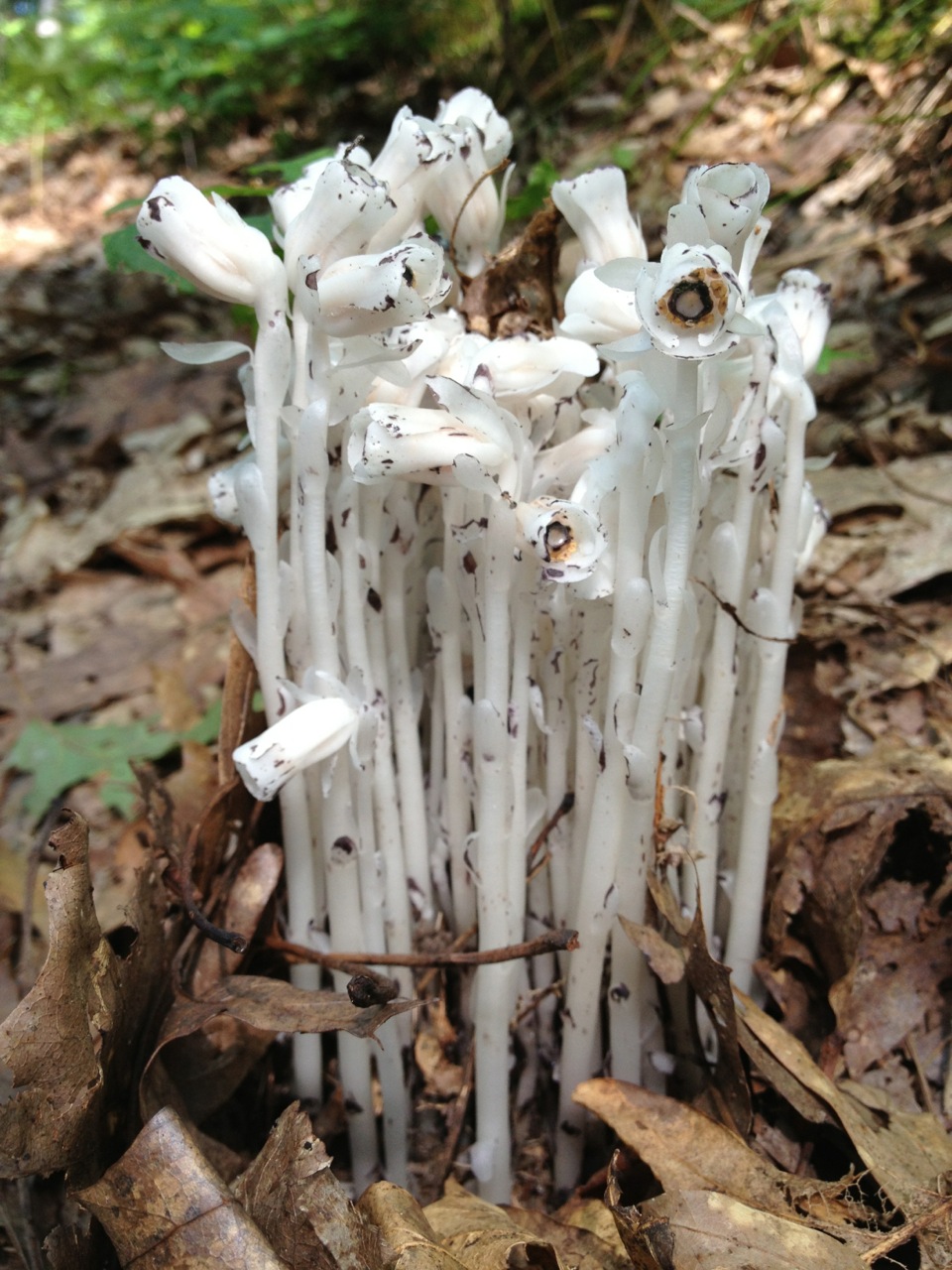
This afternoon, as I walked Phoebe down our road to a neighbor’s house for a playdate, a strange plant caught my eye on the roadside. Emerging from the brown fallen leaves were some bundles of waxy-looking stalks with what looked like bell-shaped flowers on top. They were almost totally white. I don’t just mean that the flowers were white. The whole plant was white: stems, leaves and flowers. All white.

I bent down to take a few photos with my trusty iPhone. After chatting with my neighbor about school supply lists and other exciting news, I completely forgot about the weird plant.

This evening, I remembered. A quick google search (for “white plant”) led me to the identification of the Monotropa uniflora, also known as Indian Pipe (they do look sort of pipe-like), ghost plant (they definitely look on the ghostly side) as well as corpse plant.

When I did a google search for “corpse plant,” however, I was greeted not by images of this guy, but by stories about the more famous, but similarly nicknamed, corpse flower. In case you missed hearing about it, the corpse flower is a giant flower that blooms only every few years, and not even on a regular schedule at that. Sometimes it will go a decade or more between blooms. But it is not its blooming timeline or even its massive size (8 feet tall!) for which the titan arum gets its fame, but from its smell: it is said to smell like a rotting corpse. The corpse flower was in the news quite a bit last month, as one living in the United States Botanic Garden Conservatory in Washington DC bloomed, bringing in over 130,000 visitors to sample the putrescent delights of this this olfactory oddity with their own nostrils. (Boston has one, too, apparently, but I have neither seen nor smelled it. I am tickled that it is named Morticia, though, and hope to visit her someday.)

Anyhow, this post is (mostly) not about that corpse flower, but the less famous, and much less smelly flowering corpse plant. While not nearly as dramatic, it is still a bit of a botanical oddity. This plant, you see, has no chlorophyll. As such, it is not able to produce its own food, but must live off of other plants. Specifically, it lives off certain trees and fungi. Unlike many fungi, which give something back to the host trees on which they live, the corpse plant only takes. It is parasitic. And I’m thinking kind of vampiric.

I hope to go back another day with my real camera to get some clearer shots, but I don’t know how long these things bloom. Apparently they will dry out and turn black fairly soon. I find it remarkable that I had never seen them before, nor heard of them. From what I can tell, they are fairly rare. I suppose that it caught my eye due to my recently heightened roadside plant awareness–we are always keeping our eyes open to avoid stepping in a tangle of poison ivy (which is lush and green and sadly, not rare at all).

Fairy impersonator? (friday foto finder: insect)

When I was a sophomore in high school in California, I had a truly excellent biology teacher. The assignments were creative and varied, and the lessons I learned stuck with me long after the class ended. One of the major units we covered in that class was about the insect world. We learned about all of the orders of insects. A major assignment was to collect, identify and classify insects from as many of the orders as we could. For some orders, it was ridiculously easy to find specimens. Hymenoptera (which includes ants, bees & wasps), diptera (including mosquitos and houseflies), coleoptera (beetles), lepidoptera (moths & butterflies) were a dime a dozen, with multiple species of each of those orders crossing our paths regularly. Others required a bit more persistence, hunting through the grass and under rocks, or stalking the porch light at night.

My best friend and I participated in the project with the same competitive/collaborative spirit that drove our academic success, collecting and comparing our insects with interest and enthusiasm. She, who felt revulsion for earwigs, collected her dermaptera specimen with triumph. I, with my aversion to moths, likewise felt satisfaction in including a feathery-antennaed hymenoptera specimen in my own collection. I don’t remember how many orders we each managed to represent in total, but I want to say that it was somewhere around 17 or 18. (I seem to recall that my friend managed to find one that I hadn’t, a fact which she playfully lorded over me.)

That project forever changed how I look at insects.

Living in the woods in rural Massachusetts, we sometimes get wildlife in our yard and around our house. Sometimes, the wildlife makes its way into the house. Once such bit of wildlife was this character, which turned up in our kitchen one June evening in 2010. It had a long segmented body, perhaps 2 and half inches long, and large lacy wings. I was, naturally, fascinated.


Hi.

John and I captured it in a plastic tub with the aim of releasing it. I took a few pictures of it, but sadly, they are blurry in the poor lighting conditions. Also contributing to the blur was the fact that the insect was moving constantly, and I found it hard to get my eyes to focus on it, let alone my camera. The long body and the dramatic wings had an ethereal look to them, and I wondered if sighting of such creatures in the wild, fluttering about in people’s peripheral vision, may have contributed to belief in fairies. (Compare this little guy to the mummified fairy remains highlighted on Raincoaster. If you want to study interesting specimens of humanity, some of whom claim belief in fairies, you might have a look at the comments of that post. 2220 comments to date, many of them very entertaining.)
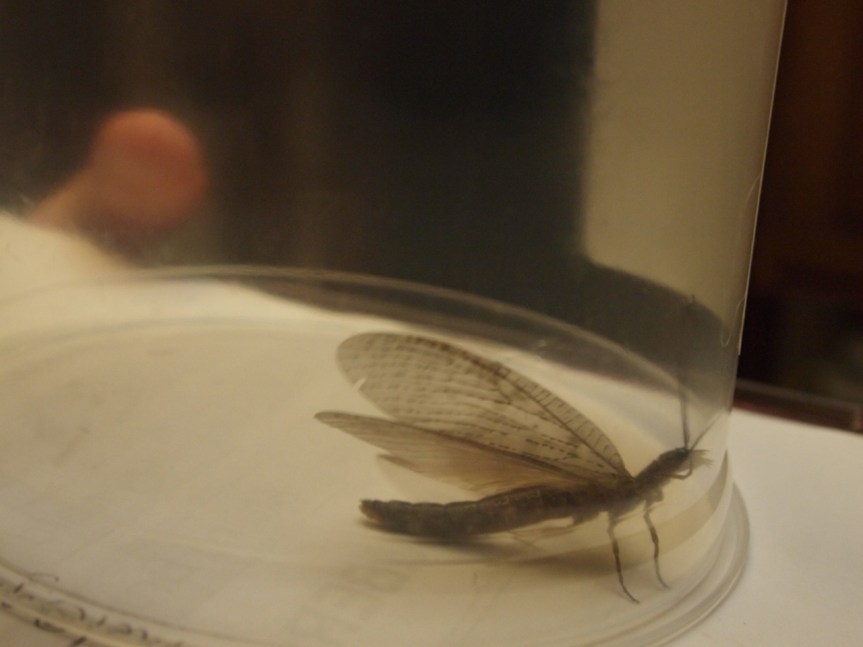

I’m bigger than your little finger.

Having ruled out that we had captured a fairy, I did wonder what exactly we had caught.

I wondered if it might be a large mayfly, (order ephemeroptera, among the more poetically named orders, reflecting the ephemeral nature of their adults’ lives). However, I think it is too large to be one. Additionally, it is missing the long cerci that mayflies have.

Most likely, it is a kind of fishfly, of the order megaloptera. (Apparently the designation of megaloptera as a separate order from neuroptera is relatively recent–I don’t know when this separation happened, though. It may not have been among the orders I learned about in high school.) Megaloptera, as you might guess from the mega prefix, are known to be large. (They are named for their large wings.)


Can I go now, please?

This week’s friday foto finder challenge was to find photos of insect(s). Unlike urban-dwelling az, who resorted to posting other invertebrates, I have quite a few photos of insects in my archives. (Ah, the perks of rural life.) I even have several posts on different insects. I have two ThThTh lists of moth things and butterfly things (order lepidoptera), plus some posts of my own photos of butterflies (again, lepidoptera) and fireflies (order coleoptera). I’m particularly fond of this one, eat or be eaten, which documents the unlucky encounter of a spider (an arachnid, and not an insect) with a damselfly (order odonata).

fff 200x60To see what other specimens have been caught for this week’s assignment, buzz, flit or crawl over to the friday foto finder blog.

leaves of three (friday foto finder: leaf)

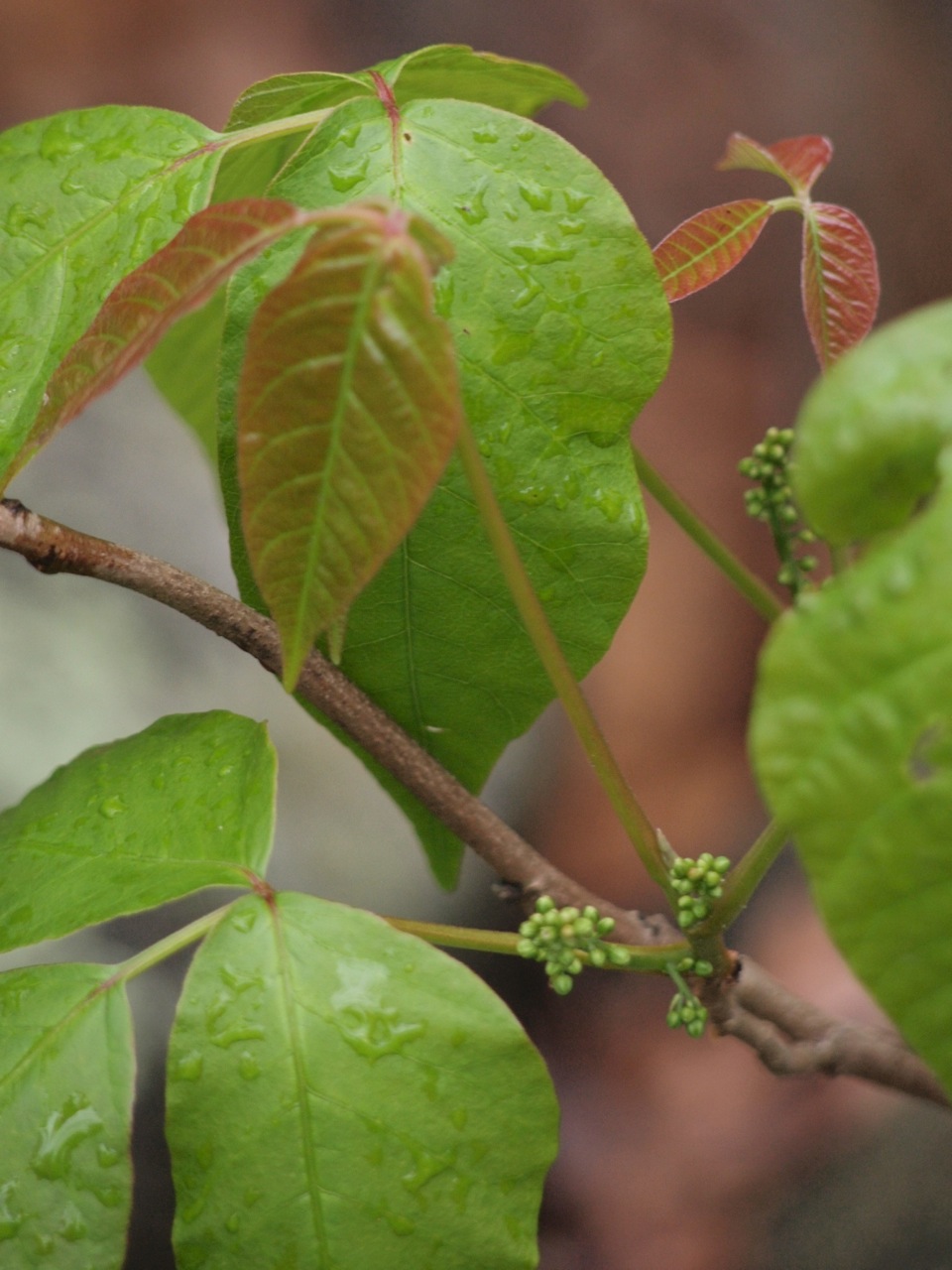
Here is a photo of a rather pretty native plant that is very common in my heavily wooded neighborhood. These shiny leaves show up late spring, often starting out red, and then developing into a lush bright green.

This plant is entirely evil.

In case you don’t recognize it, it is poison ivy: Leaves of three, let it be.

You know what’s even more evil than these leaves of three? The plant when it has no leaves. The vines stretch out over the ground, climb trees and rocks, and grow into bushes. And in the winter and very early spring, the woody stems and vines look pretty much like all the other leafless stems and vines that grow in the woods. But the leafless vines apparently have plenty of urushiol.

This is a photo I took last May on a walk in my neighborhood. This year, the poison ivy leaves are barely starting to bud. Three weeks ago, there probably weren’t any leaves on the stems that Phoebe must have touched while playing outside. She may well have washed her hands well with soap and water before she touched her face and rubbed her eyes, but urushiol doesn’t come off the skin with just soap and water.¹ Even if you use plenty of soap and scrub really hard. It was almost 3 years ago to the day that I learned this fact the hard way. And I really, really wish that we didn’t have to be reminded of this the hard way at this point in our lives.

This week’s friday foto finder is leaf. In general, I love leaves, and have posted plenty of photos of pretty fall leaves. (After all, I do live in New England.) Perhaps my choice of this less friendly leafy subject is somewhat a reflection of my toxic mood. Let’s face it, this has been a really bad month.² One good thing about the month is that it is almost over. With May coming up, I hope to be able to start fresh and turn over a new leaf.

¹ You can use products specifically formulated to work on the oils, such as Tecnu, or liquid dish detergent.
² And by “really bad,” I have a large number of expletives in mind. You can fill in your favorites.

stumped

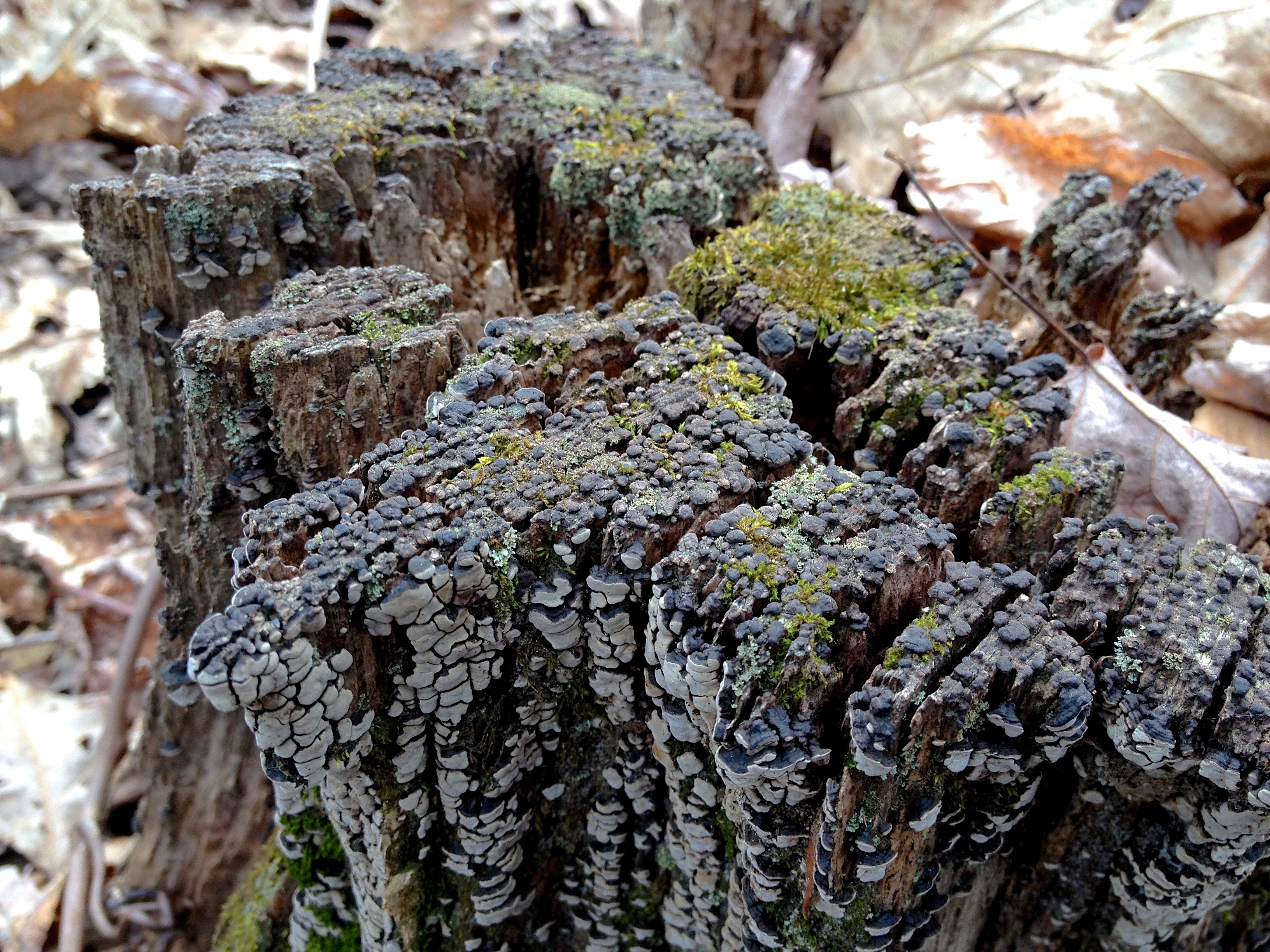
Often when I have too much going on, I find myself stumped about what to say. More often than not, I turn to poking my head around in my photo library to find things to post. Happily, this weekend was a photo-heavy one. Among the activities of the weekend, we went for a post egg-hunt walk around the wilds of our backyard. Among the many and varied things of the tree and rock persuasion, I found this one stump, which I found completely enthralling. Viewed from above, you can see that it has distinct regions, showing varying degrees of rotting, different patterns of cracking, and as a variety of growths of moss and fungus.

I liked the shapes made by the rather heart-shaped black section, nestled up with the disc of moss-covered sectionl

When viewed from the side, the green mossy section looked like a scale model version of a grass-topped cliff.

I find the textures and patterns of the black and white fungus growing on the side to be very striking.

Still another section showed more cliffs and spires, this time rounded off a bit by the fungus.

I’m seriously considering going back and seeing if there were other interesting things going on with that stump that I missed.

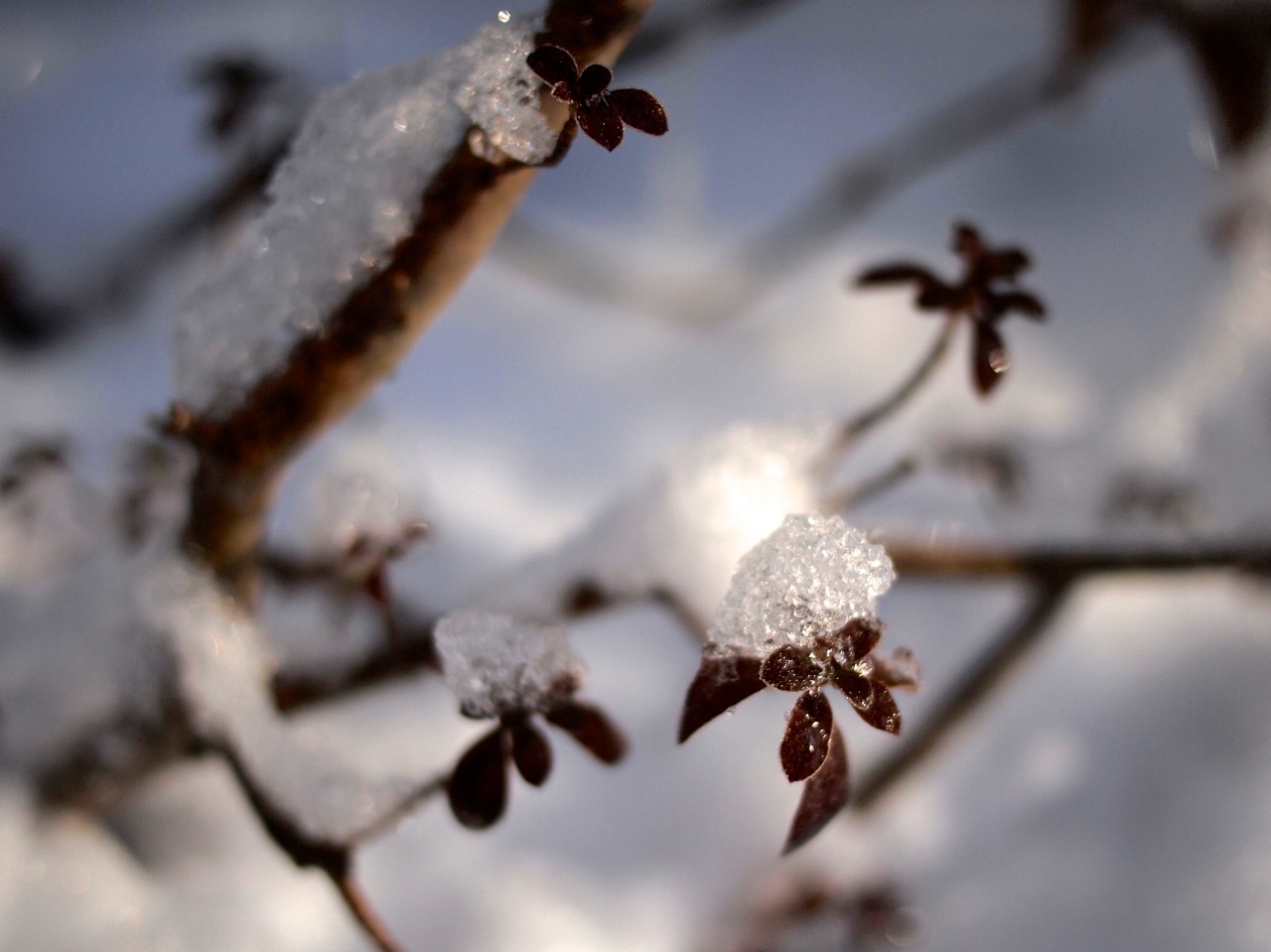
icy branches

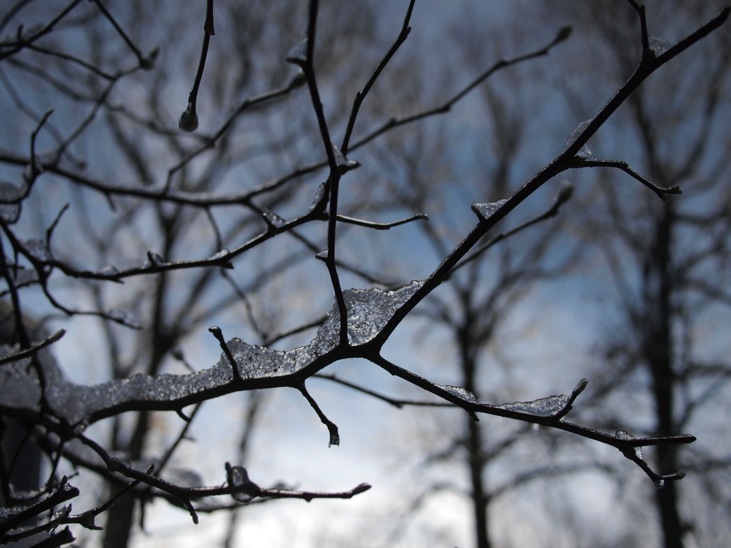
These are some photos from a month ago, taken that same morning that I photographed the ice drops. The light was so beautiful that I went back in to get my camera after the school bus came for Phoebe. (The iPhone does quite well for many occasions, but there are times when I really want to be able to better control the focus and the depth of field.)

I do seem to be sharing a lot of photos of ice and snow these days…