Phoebe’s last doctor’s appointment was a while ago now. Her 18 month appointment. (She’s now 21 months old.)
For those of you who haven’t taken a baby on a well visit to the doctor, they tend to follow a predictable pattern, at least in our experience. You go into a room strip the baby down. A nurse weighs the baby, and measures the baby’s length and head circumference. Then you wait a bit and the pediatrician comes in. She looks over the measurements, and pokes and prods the baby. Looks in ears and mouth, listens to lungs and heart. Asks questions about development. How much milk does she drink? Does she still drink from a bottle? Eating solid foods? Using a spoon? Is she babbling? Yodling? Falling asleep on her own? Crawling? Walking? Dancing?
We answer the questions, and it being us, we joke around a bit with the doctor. Happily, she has a sense of humor and understands when we are joking. The visit goes pretty uneventfully, typically. We learn that Phoebe is big and tall for her age. We rattle off some of her accomplishments. Things are all smooth sailing till the doctor leaves and the nurse comes in to give the shots. And then it’s over till next time.
But this last time there were a couple of things that caught me by surprise. One was that the doctor heard a heart murmur. And the other was that she thought that Phoebe’s speech was lagging.
After the visit, we got the referral for the cardiologist to check on the murmur. We weren’t too worried, as the doctor didn’t think it was likely to be a troublesome murmur. But of course we followed through. We wouldn’t take risks with Phoebe’s heart. We sought the expert opinion. And the cardiologist confirmed that the murmur is completely benign.
The speech part of the story is ongoing.
Phoebe is a quiet child, for the most part. She takes after her parents. She started saying a few words at around 12 months old, and over the following months added quite a lot of words. But the thing is, she would use a word for a day or two, and then move on to the next word. We wouldn’t hear the word again in most cases. Turtle was a favorite word for quite a while, and then yellow, and then uh-oh. And there would be all sorts of other words she’d use only once or twice, often carefully articulating. Shoe. Puzzle. Rubberband. She spent a whole day working on getting the production of hat just right, getting the /h/, and the vowel and fully released /t/ out there in a careful sequence.
So when the doctor asked for a list of words that Phoebe used regularly and consistently, we didn’t really have much of a list to offer. That wasn’t what Phoebe was doing. We could remember maybe 2 or 3 words. Ball. Uh-oh. No. There were a couple of signs and gestures, too.
What’s funny is that I have studied language development in classes, and have read a textbook or two, and attended lots of conference talks on the subject. But up to that visit, I hadn’t really given much thought to whether Phoebe’s development was on schedule. I had noticed that Phoebe was not doing the things the textbooks had described, but I figured that intro textbooks tend to overgeneralize, and that individual babies have different patterns. Actually, I still think this is the case. Phoebe was using language productively, and showing remarkable comprehension of even quite complex sentences and structures. It hadn’t occurred to me to worry. So when the doctor mentioned that she thought Phoebe was behind in her speech, and that she recommended that we get an evaluation for early intervention, I was quite startled. My first first reaction was that this wasn’t necessary. But I agreed that we would take the information and consider it before the next well visit, which wouldn’t be till Phoebe turns two.
The doctor said that at 18 months, a child should be using at least 5 or 6 words consistently. I thought our list wasn’t that far off, especially as we drove home from that visit. I remembered a few more words here and there. I realized that had I been more fully prepared, I could have presented a list of 6 or so words. And perhaps the doctor would have just taken the list as adequate to meet the criteria of her checklist.
John was a late talker. His mother doesn’t remember the details of when he started talking, but remembers that she had a sign up over his bed saying that Einstein didn’t talk till he was 4 years old, or some such. John’s family says that once he started talking, he was using complete sentences. So it doesn’t seem too surprising that Phoebe is taking after her father. She has been a cautious child, much like John was, I’m told.
But the truth is, I’ve had murmurs of doubt. I know that children do vary a lot in their paths through language development. I’ve seen that other kids were much more verbal at Phoebe’s age, and even younger. A baby who lives next door to John’s parents was producing about 60 words consistently by the time she was 14 months. A friend’s daughter was saying all kinds of words when I’d seen her when she was 16 months, making requests, chattering away. I don’t necessarily think Phoebe needs to be as verbal as those other kids, but I sometimes wonder.
She does a lot of pointing. We do a lot of 20 questions, trying to figure out what she wants. We communicate quite a lot, and things go quite smoothly most of the time. She makes observations. She names objects. She responds to questions. She’s produced a few two-word combinations. There are times when she says fairly long things which we can mostly decipher, though other times when we have no idea. She has lately even gotten better at producing words on request, as in answering “what’s that?” or “what does a dog say?” And she’ll say “please,” now, on request. Which is so freakin’ cute I can’t even tell you.
She’ll say “more” if she wants something, and point, but beyond that it’s as if she hasn’t fully figured out that she can use words to make requests. She’s been getting better at this, though. But still, every once in a while, she gets frustrated. I can’t tell what she’s pointing at. Or guess what she wants to do.
I sometimes read about the verbal progress of kids Phoebe’s age, or younger, and I feel little pangs. I know she’ll be talking soon enough. But I do sometimes get impatient to reach that next stage. And I would really love it if she called me something. She knows I’m Mommy, but she never calls me that. She doesn’t call for me. For a while she called me Ada, which I realized came from “other.” (Maybe I’ll share the story some time.) She has said Daddy for a while, but there was a stretch when she’d use it to mean “good-bye.” She’s now started to say “bye,” but may have stopped saying Daddy.
Anyhow, the upshot is that we are having the early intervention evaluation. I realized that even though I know quite a bit about language development, I am not an expert, and I certainly don’t have a clinical background. I didn’t feel like the suggestion that we see a cardiologist was somehow a criticism of us or our parenting abilities, so it shouldn’t be any different for this. I still have this nagging feeling that they’ll tell us we’re doing something wrong, or that they’ll tell us we’re overreacting. And while I have decided that I am 85% sure that they will think that Phoebe is on track, I have realized that I don’t want to withhold from Phoebe anything that might be beneficial to her, such as early intervention services. Certainly not out of some sense of pride.
So some people are coming over to our house bright and early tomorrow morning. (Or this morning, if you want to get technical, since it’s after midnight.) Which means I should be cleaning, and not writing this. Because I can’t quite get over the feeling that they will be evaluating us, and not just Phoebe’s language.

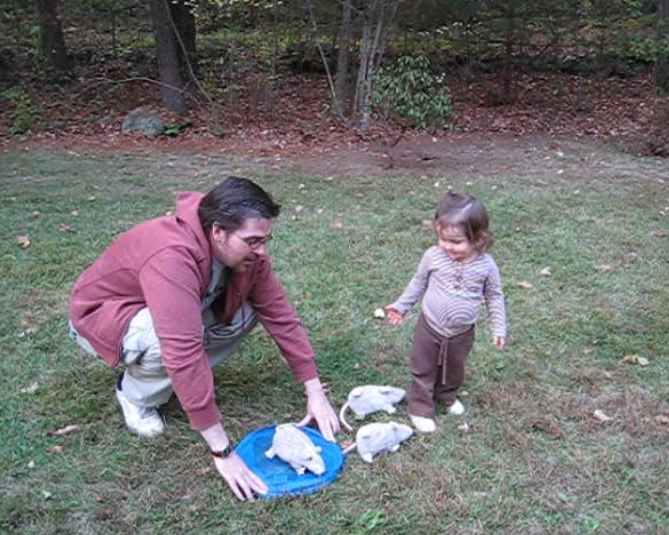
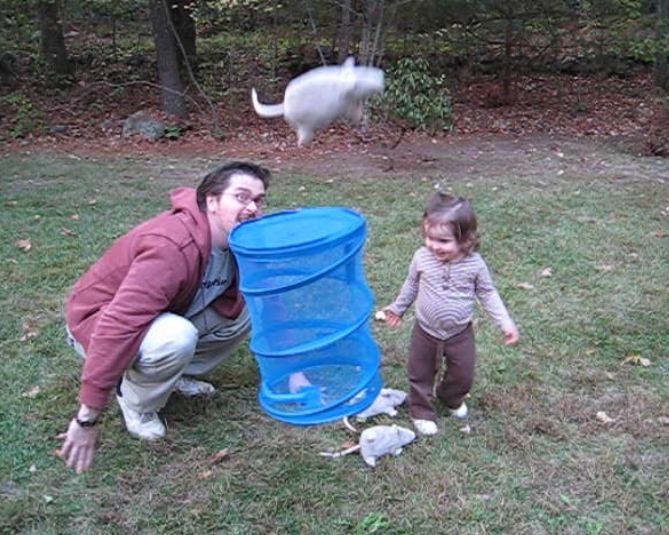
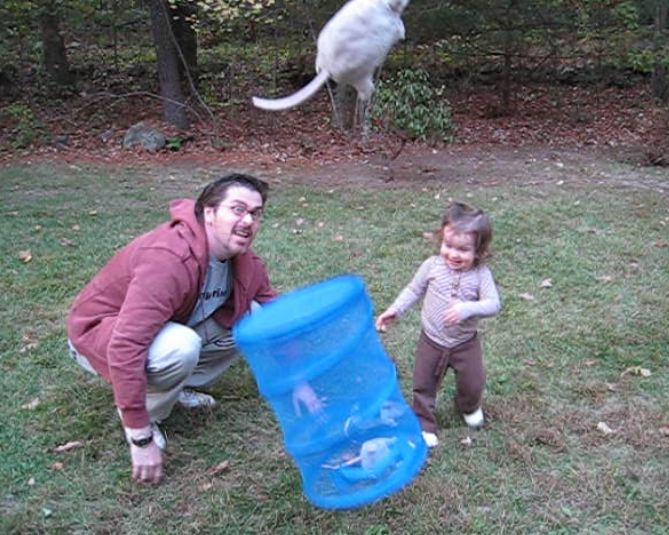
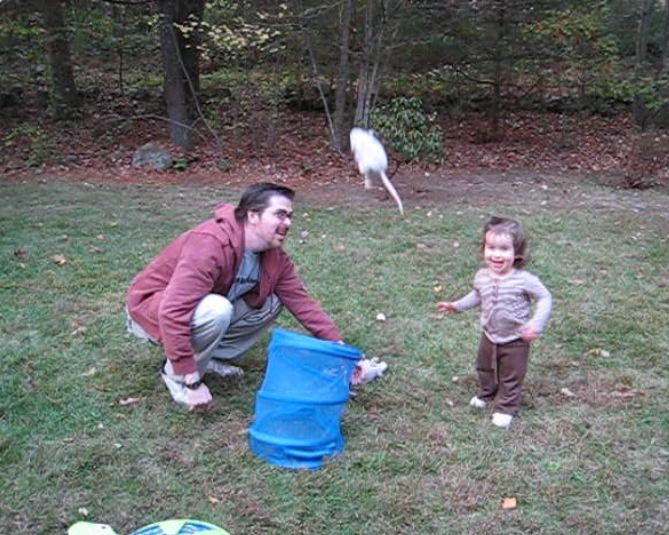
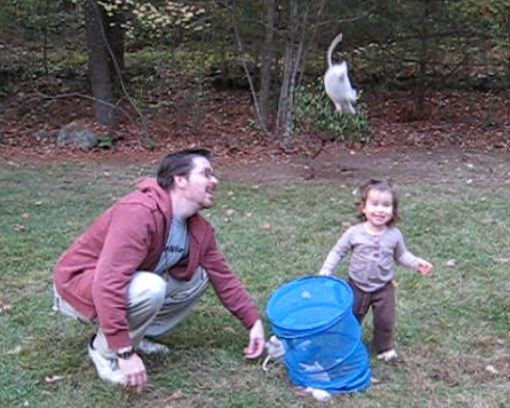
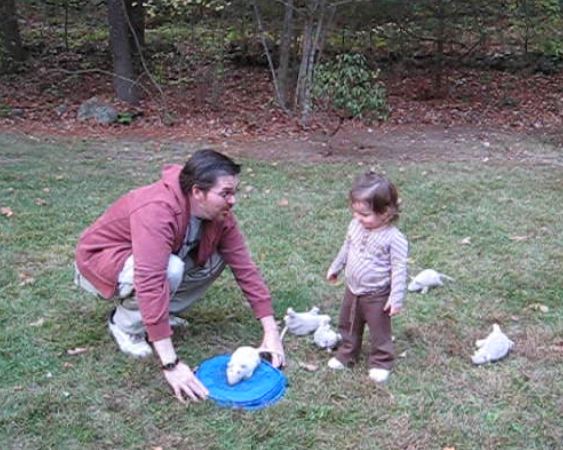
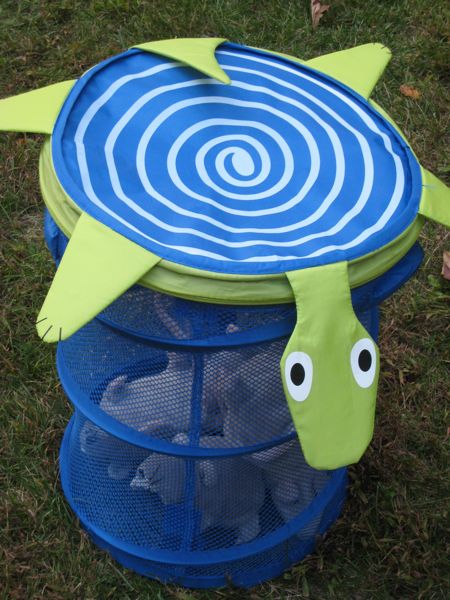
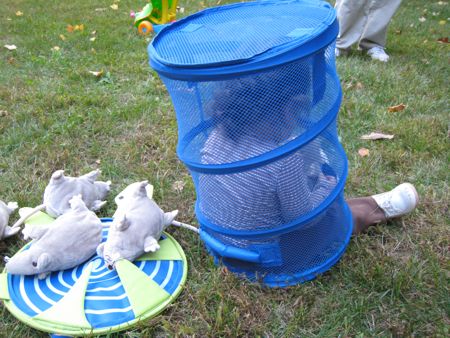
 From time to time, I have been known to do a product review. (Some of you may remember my review of the iPhone, and the followup discussion of the Apple iCup.) I’ve been wanting to share this product for a while, but thought it would be good to wait for the Year of the the Rat celebrations to kick in. So, here it is: a review and demo of the Ikea Rat Launcher.











 collecting tokens
